.svg)

- Loading...
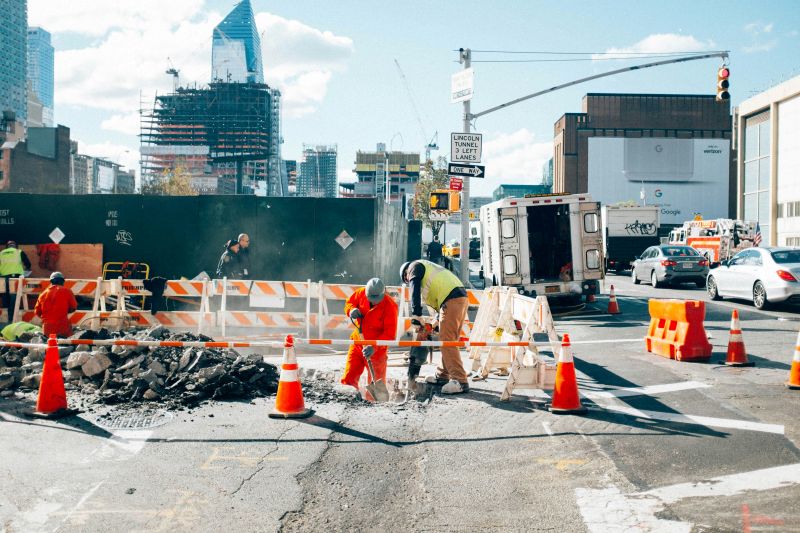
This article provides an overview of New York's Labor Law sections 240(1), 241(6), and 200. These statues mandate safety protections for the benefit of workers involved in construction, demolition, and related work. New York courts have noted that such work is inherently dangerous, and by its very nature of their employment, those engaged in such work are not in a position to protect themselves form its hazards.
This article focuses on Labor Law 241(6) and its New York State Industrial Code implementing regulations treating confined space work, the mechanical ventilation of flammable and potentially explosive airborne contaminants in confined spaces, and associated worker protections. In addition, this article distinguishes the prima facie elements of a Labor Law section 241(6) case from those of a Labor Law section 240(1) and 200 case.
Labor Law Subsection 240(1)
The Court of Appeals, in Blake v. Neighborhood HousingServices of New York City, Inc., l N.Y.3d 280, 284 - 85 803 N.E.2d 757, 771N.Y.S.2d 484 (2003), summarized the legislative history of Labor Law section 240(1), emphasizing the statute’s remedial legislative intent:
[t]he first scaffold law, an ancestor of our Labor Law 240(1), was enacted .. .in response to the Legislature's concern over unsafe conditions that beset employees who worked at heights (See L. 1885, Ch. 314). In promulgating the statute, the lawmakers reacted to widespread accounts of deaths and injuries in the construction trades ... Most tellingly, the lawmakers fashioned the pioneer legislation to "give proper protection" to the worker. These words are at the heart of the statute and have endured through every amendment.
The Court of Appeals further observed that "[t]he Legislature looked to employers (and later, contractors and owners) as the entities best able to control the workplace and provide for its safety, casting them in liability for their failure to obey the law. The objective was-and still is-to force owners and contractors to provide a safe workplace, under pain of damages." Blake, 1 N.Y.3d at 286. See Zimmer v. Chemung Co. Performing Arts, 65 N.Y.2d 513, 520, 482 N.E.2d 898, 493 N.Y.S.2d 102 (1985) (Labor Law section 240 places ultimate responsibility for safe building practices on the owner and general contractor, instead of on the workers who are scarcely in a position to protect themselves from accidents). Accordingly, Labor Law section 240(1) is to be construed liberally to accomplish its legislative purpose. Lombardi v. Stout, 80 N.Y.2d 290, 295 - 296, 604 N.E.2d 117, 590 N.Y.S.2d 55 (1992). It requires owners and contractors to provide or erect suitable devices to protect workers when the work is being performed on a building or structure. Id.
Under Labor Law 240(1), owners and general contractors, and their agents -- except for owners of one or two family dwellings, who contract for but do not direct or control the work -- are absolutely liable for a violation of Labor Law 240 if that violation was a proximate cause of the worker's accident. Unlike Labor Law section 200, which is discussed below, notice of a defect is not required and the worker's comparative negligence, if any, does not apply to reduce a verdict. Labor Law 240(1) requires those "who contract for but do not direct or control the work, in the erection, demolition, repairing, altering, painting, cleaning or pointing of a building or structure to furnish or erect, or cause to be furnished or erected for the performance of such labor, scaffolding, hoists, stays, ladders, slings, hangers, blocks, pulleys, braces, irons, ropes, and other devices which are to be so constructed, placed, and operated as to give proper protection to a person so employed". Whether the case involves a falling worker or object, the elements of plaintiffs' prima facie Labor Law 240(1) case include establishing that the accident occurred as a result of the hazard contemplated by the statute, a gravity related risk, and that the accident proximately resulted from the failure to provide an enumerated safety device or where the provided safety device is defective or otherwise inadequate to prevent the accident. E.g., Fabrizi v. 1095 Avenue of the Americas, LLC, 22 N.Y.3d 658, 8 N.E.3d 791, 985 N.Y.S.2d 416 (2014), citing Narducci v. Manhasset Bay Association, 96 N.Y.2d 259, 750 N.E.2d 1085, 727 N.Y.S.2d 37 (2001).
Labor Law section 2401(1) imposes a nondelegable duty on construction site owners, general contractors, and their agents to protect workers from accidents arising from the effects of gravity, such as those inherent in elevated work sites, where the statutorily indicated safety device was not provided or was inadequate to prevent the accident. Section 240 cases typically involve falls of workers from a height or falling objects which injure the worker. Representative Labor Law 240(1) cases include, but are not limited to, instances where a ladder or scaffold does not function properly resulting in a worker's fall and injury or where a load being lifted or lowered gives way due to a failure to use necessary and adequate hoisting or securing safety devices and injures a worker. Quattrocchi v. F.J. Sciame Construction Corp., 11 N.Y.3d 757, 896 N.E.2d 75, 11 N.Y.3d 757, 866 N.Y.S.2d 592 (2008); Narducci v. Manhasset Bay Association, 96 N.Y.2d 259, 750 N.E.2d 1085, 727 N.Y.S.2d 37 (2001). The failure to provide covered individuals working at a height with the statutorily indicated safety device -- such as, for instance, a safety harness with a snap hook or carabiner which attaches the harness' lanyard to an anchorage point sufficient to prevent worker falls, or with appropriate safety devices to secure hoisted objects and prevent them from falling onto workers -- results in Labor Law 240(1) liability, since the worker's injury would arise directly from the effects of gravity. See, e.g., Quattrocchi v. F.J Sciame Construction Corp., 11 N.Y.3d 757, 896 N.E.2d 75, 11 N.Y.3d 757,866 N.Y.S.2d 592 (2008); Arias v. 139 East 5th Street Landlord, LLC, 212 A.D.3d 517, 182 N.Y.S.3d 78 (1st Dept. 2023); Ladd v. Thor 680 Madison Avenue, LLC, 212 A.D.3d 107, 180 N.Y.S.3d 25 (1st Dept. 2022).
In Runner v. New York Stock Exchange, 13 N.Y.3d 599, 922 N.E.2d 865, 895 N.Y.S.2d 278 (2009), the Court of Appeals clarified that it was not necessary for plaintiff to demonstrate a significant elevation differential between a falling or descending object and the injured worker for the case to come within the purview of Labor Law section 240(1) protections; the Court ruled that the short distance of a few steps that the 800 pound reel of wire descended could not be characterized as de minimus in light of the weight of the object and the amount of force it was capable of generating. The Court noted that the statute was designed to prevent those types of accidents in which the safety devices designated in the statute were either not provided, or were either inadequate, or were not placed and operated to shield the worker from hazards flowing from the effects of gravity. Runner, 12 N.Y.3d at 604, 922 N.E.2d at 868, at 895 N.Y.S.2d 282, citing Ross v. Curtis-Palmer Hydro-Elec. Co., 81 N.Y.2d 494, 501, 618 N.E.2d 82, 601 N.Y.S.2d 49 (1993).
Labor Law section 240(1) often provides plaintiffs with a statutory vehicle to move for partial summary judgment on the issue of liability and to set the case down for an inquest on damages. Defendants typically seek to oppose such a motion on the basis that there are issues of material fact for jury resolution as to whether a violation of Labor Law 240(1) actually occurred and if it did, whether the violation was the proximate cause of the injuries. E.g., Chimborazo v. WCL Associates, Inc., 37 A.D.3d 394, 829 N.Y.S.2d 635 (2d Dept. 2007) (summary judgment properly denied where there were issues of fact as to whether plaintiff was a recalcitrant worker and whether his own conduct was the sole proximate cause of his injuries); Zeitner v. Herbmax Sharon Associates, 194 A.D.2d 414,599 N.Y.S.2d 234 (1st Dept. 1993). Plaintiffs summary judgment motion may provoke a cross-motion for summary judgment seeking dismissal of the case on the basis that plaintiff's actions were the sole proximate cause of his injury and that the worker, therefore, is not entitled to recover under Labor Law section 240(1). See, e.g., Robinson v. East Medical Center, 6 NY3d 550, 847 N.E.2d 1162, 814 N.Y.S.2d 589 (2006); Montgomery v. Federal Express Corp., 4 N.Y.3d 805, 828 N.E.2d 592, 795 N.Y.S.2d 490 (2005). If there are no material issues of fact as to whether plaintiff's actions were the sole proximate of his injuries, defendants would be well positioned to move for summary judgment regardless of whether plaintiff has interposed a summary judgment motion.
Labor Law Subsection 241(6)
Labor Law sections 240(1) and 241(6) differ in critical aspects. Unlike cases governed by Labor Law 240(1), a breach of a concrete, as distinct from a general, provision of New York State's Industrial Code which proximately causes the accident is required to establish plaintiff's prima facie Labor Law section 241(6) case. E.g., Rizzuto v. L.A. Wenger Contracting Ca., 91 N.Y.2d 343,348,670 N.Y.S.2d 816, 693 N.E.2d 1068 (1998); Shaw v. RPA Associates, LLC, 75 A.D.3d 634, 636-37, 906 N.Y.S.2d 634 (2d Dept. 2010); Cambizaca v. New York City Transit Authority, 57 AD3d 701, 702 (2d Dept. 2008); Ross v. Curtis-Palmer Hydro-Elec. Ca., 81 N.Y.2d 494, 501, 618 N.E.2d 82,601 N.Y.S.2d 49 (1993). Moreover, unlike in Labor Law 240(1) causes of action, comparative negligence remains a cognizable affirmative defense in a Labor Law 241(6) case. E.g., Louis v. Town of North Elba, 16 N.Y.3d 411, 947 E.E.2d 1169, 923 N.Y.S.2d 319 (2011).
Labor Law section 241(6) and the decisional law which has interpreted that section impose a non-delegable duty on site owners, general contractors, and their agents to provide reasonable and adequate protections and safety to workers, as specified in applicable New York State Industrial Code provisions, in all areas in which construction, excavation or demolition work is being performed. E.g., Rizzuto v. L.A. Wenger Contracting Co., Inc., 91 N.Y.2d 343,348,670 N.Y.S.2d 816,693 N.E.2d 1068 (1998); Comes v. New York State Elec. and Gas Corp., 82 N.Y.2d 876,878,609 N.Y.S.2d 168,631 N.E.2d 110 (1993); Russin v. Louis N Picciano & Son, 54 N.Y.2d 311, 317-318, 445 N.Y.S.2d 127,429 N.E.2d 805 (1981). Labor Law 241 (6) requires the work to be so constructed, shored, equipped, guarded, arranged, operated, and conducted as to provide such protection and safety to the persons employed at or frequenting construction, excavation, or demolition work sites.
Since the duty imposed on an owner, contractor, or their agent pursuant to Labor Law 241 (6) is nondelegable, these parties can be held liable for the violation of an Industrial Code provision even absent their supervision or control of the particular work in issue. E.g., Louis v. Town of North Elba, 16 N.Y.3d 411, 947 E.E.2d 1169, 923 N.Y.S.2d 319 (2011).
The Industrial Code provisions which provide a basis for a Labor Law 241(6) cause of action are found in Part 23 of the Industrial Code. Industrial Code Part 12 regulations, however, may inform a Labor Law section 241(6) violation if they are specifically incorporated by reference in Part 23 regulations, as they are in 12 NYCRR subsection 23-1.7(g). For there to be liability on a general contractor and owner under Labor Law 241(6), the Industrial Code violation must have been a proximate cause of the worker's injury. E.g., Chiarella v. New York State Thruweay Authority, 230 A.D.3d 463,217 N.Y.S.3d 573 (2d Dept. 2024).
Moreover, for worker to be covered under Labor Law § 241(6), the employee needs to be engaged in construction, excavation, or demolition. E.g., Jock v. Fein, 80 N.Y.2d 965, 605 N.E.2d 365, 590 N.Y.S.2d 979 (1992); La Clair v. Shelly Slectric, Inc., 264 A.D.2d 55, 705 N.Y.S.2d 106 (3d Dept. 2000). Construction work, for instance, is defined in Industrial Code 12 NYCRR § 23-1.4(13) as "[a]ll work of the types performed in the construction, erection, alteration, repair, maintenance, painting or moving of buildings or other structures." See Joblon v Solow, 91 N.Y.2d 457,695 N.E.2d 237,672 N.Y.S.2d 286 (1998). By its very language, section 241(6) is not limited only to a common understanding of the meaning of "construction work" regardless of the general language of section 241(6), but includes other types of activities as well. Despite the broad language of Industrial Code 12 NYCRR section 23-1.4(13), Labor Law § 241(6) is "inapplicable outside the construction, demolition or excavation contexts." Esposito v New York City Industrial Development Agency, 1 N.Y.3d 526, 528 (2003).
Under Labor Law section 241(6), the general contractor and owner will be held vicariously liable for the negligence of a subcontractor which results in the violation of a concrete Industrial Code rule which proximately causes the worker's injuries, even in the absence of an owner's or general contractor's control or supervision of the worksite where the accident occurred. Rizzuto v. L.A. Wenger Contracting Co., 91 N.Y.2d 343, 349 - 350,670 N.Y.S.2d 816, 818, 693 N.E.2d 1068, 1070 (1998). In Rizzuto, the Court of Appeals explained:
although this Court has consistently rejected the notion that a violation of section 241(6) results in absolute liability irrespective of the absence of some negligent act which caused the injury, we have repeatedly recognized that section 241(6) imposes a nondelegable duty upon an owner or general contractor to respond in damages for injuries sustained due to another party's negligence in failing to conduct their construction, demolition or excavation operations so as to provide for the reasonable and adequate protection of the persons employed therein. Thus, once it has been alleged that a concrete specification of the Code has been violated, it is for the jury to determine whether the negligence of some party to, or participant in, the construction project caused plaintiffs injury. If proven, the general contractor (or owner, as the case may be) is vicariously liable without regard to his or her fault.
Labor Law Section 200
There are pivotal distinctions between Labor Law section 241(6) and section 200. Unlike section 241(6), to be held liable under section 200, the site owner or general contractor is required to have either directed, supervised, or controlled the means and methods of the work causing the accident or to have had the authority to do so, to enable the owner or general contractor to avoid or correct the unsafe condition. Russin v. Louis N Picciano & Son, 54 N.Y.2d 311, 316-317, 445 N.Y.S.2d 127,429 N.E.2d 805 (1981); Ross v. Curtis-Palmer Hydro-Elec. Co., 81 N.Y.2d 494,505,618 N.E.2d 82,601 N.Y.S.2d 49, (1993).
Labor Law section 200, is a codification of common-law principles which impose upon the owner and general contractor a duty to provide construction site workers with a safe place to work. Russin v. Louis N Picciano & Son, 54 N.Y.2d 311, 317-318, 445 N.Y.S.2d 127,429 N.E.2d 805 (1981). This section applies to all locations where the Labor Law applies. Under this section, the work is to be "so constructed, equipped, arranged, operated and conducted as to provide reasonable and adequate protection to the lives, health and safety" of employees. While the purview of this section is not limited to construction work, within the context of such work, it requires the site owner and general contractor to take reasonable measures for worker safety, to provide for a safe work site, and to provide for and promote safe methods of performing the work. Jock v. Fein, 80 N.Y.2d 965,605 N.E.2d 365, 590 N.Y.S.2d 979 (1992). In addition, Labor Law 200 liability may be found where the accident proximately arose from a dangerous or defective worksite condition or hazard of which the owner or general contractor had actual or constructive notice. E.g., Lombardi v. Stout, 180 N.Y.2d 290,604 N.E.2d 117, 590 N.Y.S.2d 55 (2000); Wrighten v. ZHN Contracting Corp., 32 AD3d 1019, 822 N.Y.S.2d 115 (2d Dept. 2006). Moreover, comparative negligence is a valid affirmative defense in a Labor Law section 200 cause of action. See, e.g., Maza v. University Avenue Development Corp., 13 A.D.3d 65, 786 N.Y.S.2d 149 (1 st Dept. 2004).
Labor Law 241(6) and Industrial Code Provisions Pertinent to Confined Space Construction Work in the Presence of Volatile and Flammable Airborne Contaminants
The Jacob D. Fuchsberg Law, LLP currently represents three construction workers in an interesting case alleging multiple violations of the Industrial Code. The case concerns confined space work and its associated hazards in the presence of a toxic, volatile, highly flammable, and potentially explosive bonding adhesive. As part of an apartment building's construction, the plaintiffs were directed to apply the bonding adhesive in the confined space of a water detention tank, even though the adhesive was designed to bond single-ply roofing membranes and flashings to various roofing substrates in outdoor applications, and the product's safety data sheet specifically warns that it was only to be used outdoors or in well-ventilated spaces. A water detention tank is a below grade tank that receives water run off from the roof through gutters and leaders and then discharges the water into the city sewer system in a manner that does not overflow the sewer.
The water detention tank in question had a single opening, a small ceiling hatch through which workers would enter and exit with the means of a ladder they would drop down into the tank. The confined space was not mechanically ventilated, so as to provide proper intake or exhaust ventilation. Non-explosive mechanical exhaust ventilation with pipes extending to the detention tank's floor was indicated, but not provided, to exhaust the heavier-than-air bonding adhesive's vapors which would collect near the tank's floor while the adhesive was applied within the tank. Per plaintiffs expert, the open roof hatch was not capable of passively exhausting the adhesive's vapors which accumulated at approximately floor level. Air contaminant meters were not utilized, and air contamination readings were not taken before and during the application of the bonding adhesive to assess whether the accumulated vapors had exceeded their lower ignition limit. Moreover, plaintiff’s had not been trained in confined space work so as to be better able understand its inherent risks and how to avoid or minimize them, the required confined space entry permit was not obtained, and a safety monitor was not positioned just outside the single ceiling hatch to monitor ongoing conditions in the tank and emergently aid in the workers' evacuation if needed.
Nor were the workers issued necessary respiratory protection. An air supplied or self contained breathing apparatus (SCBA) is recommended in the bonding adhesive's manufacturer's safety data sheet when, inter alia, personal exposure concentrations can not be maintained below appropriate limits using engineering controls or when personal exposure levels are unknown. fu the instant case, air contaminant concentrations were not measured; accordingly, the workers' exposure limits were unknown. Nonetheless, air supplied or SCBA respirators were not provided. All three plaintiffs sustained severe respiratory injuries as well as second and third degree burns when the bonding adhesive's vapors ignited and resulted in a flash fire.
Pertinent Industrial Code Provisions:
By way of background, a "confined space" is defined by the Industrial Code as:
(a) Confined space definition. As used in this section, a confined space means a room, a portion of a room or an enclosure having no means of natural ventilation other than one entrance opening and which room, portion of a room or enclosure is of such dimensions that a painter is required to work inside such room, portion of a room or enclosure. Such confined space may be a tank ... or a similarly enclosed space.
(b) General requirements. The painting of confined spaces, including the use of coating materials . .. [and] solvents ... , shall be so performed as to prevent the dissemination of such harmful materials into the air where persons are located in quantities tending to injure the health of such persons.
12 NYCRR § 23-2.8.
Part 23 of the Industrial Code defines dangerous aircontaminants as:
Dangerous air contaminants. Air contaminants in quantities greater than 25 percent of the lower explosive level of any substance, mixture or compound which they may form."
12 NYCRR § 23-1.4(b)(14).
The definition of dangerous air contaminants is also essentially duplicated in 12 NYCRR 12 - 1. 7(b ), which provides that "[c]oncentrations of vapors which may be present in enclosed areas shall be deemed to be flammable when any such concentration exceeds 25 percent of the lower explosive level." Key to the liability analysis is whether an implicated subcontractor, or the owner or general contractor failed to ensure that the concentration of the subject product's vapors did not exceed 25 percent of its lower explosive level, in contravention of 12 NYCRR section 12-1.7(b).
This Industrial Code Part 12 subsection, is also incorporated by express reference into Part 23 by virtue of 12 NYCRR subsection 23-1.7(g). Accordingly, a violation of this Part 12 provision may sustain a Labor Law section 241(6) case. Subsections 12-1.7(a) & (b) provide in pertinent part:
(a) All processes or operations using or generating air contaminants which constitute a fire or explosion hazard shall be protected from sources of accidental ignition .....
(b) Concentrations of vapors which may be present in enclosed areas shall be deemed to be flammable when any such concentration exceeds 25 percent of the lower explosive level.
Industrial Code 12 NYCRR section 23-l.7(g) and section 12.1.9 are applicable to confined space work and regulation of air contaminant levels. In that regard, 12 NYCRR subsection 23-1. 7(g) provides:
Air contaminated or oxygen deficient work areas. The atmosphere of any unventilated confined area including but not limited to a ... tank ... where dangerous air contaminants may be present or where there may not be sufficient oxygen to support life shall be tested by the employer, his authorized agent or by a designated person before any person is suffered or permitted to work in such area. Such testing shall be in accordance with the provisions of lndustrial Code Part (rule) 12 relating to the "Control of Air Contaminants" and such areas shall be subject to the other pertinent provisions of lndustrial Code Part (rule) 12 and of lndustrial Code Part (rule) 18 relating to "Exhaust Systems".
The courts have held that section 23-1.7(g) is sufficiently specific to serve as the predicate for liability under Labor Law section 241(6). See, e.g., Piazza v. Cimineli, 2 A.D.3d 1345, 1347 - 48, 770 N.Y.S.2d 504 (4th Dept. 2003) (12 NYCRR 23-l.7(g), 12 NYCRR 12-1.6(a), 12-1.9(a)(l) and (b)(5) & (6) are not general safety standards but are sufficiently specific to provide a basis for a Labor Law 241(6) cause of action). Since section 23-1.7(g) expressly incorporates by reference Part 12 of the Industrial Code, violations of those Part 12 sections are also sufficient to state a Labor Law 241(6) case, whenever the regulations are not general, but are sufficiently specific or concrete to provide a basis for this cause of action. Id.
In construing 12 NYCRR 12-1.9(a)(l) & (b)(5) & (6), the Appellate Division held in Piazza that regulations precluding entry into a confined space without testing it for dangerous air contaminants, directing such testing, and directing the use of a mechanical ventilation system, were sufficiently concrete regulations to support a Labor Law 241(6) case.
Subcontractor action would be governed, inter alia, by 12 NYCRR section 12-l.4(b):
PREVENTION OF AIR CONTAMINATION
(b) Responsibility of Employers
****
(3) No employer shall suffer or permit an employee to work in a room in which there exist dangerous air contaminants in a work atmosphere.
(4) No employer shall suffer or permit dangerous air contaminants to accumulate or remain in any place or area subject to the provisions of this Part (rule).
While the Fourth Department has held that 12 NYCRR section 12 - 1.4 (a) and (b)(1) and (b)(2)set forth only general safety requirements, it has ruled that subparagraphs (b )(3) and (b)(4) are sufficiently specific to support a Labor Law 241 (6) claim. Piazza v. Frank Ciminelli Construction Co., 2 A.D.3d 1345, 770 N.Y.S.2d 504 (4th Dept. 2003).
The directives of Industrial Code 12 NYCRR 12-1.9(a)(l) & (b)(5) & (6), inter alia, are directly applicable to cases involving confined spaces where the workers are potentially exposed to dangerous air contaminants:
Entering Confined Spaces
(a)(l) Confined spaces where dangerous air contaminants have been present, are present or could be introduced from potential sources shall not be entered by any person for any reason until the atmosphere of such confined spaces has been tested and found free of dangerous air contaminants. Any such confined space shall be continuously maintained free of dangerous air contaminants during any period of occupancy. If, however, due to emergency conditions any such confined space cannot be cleared of dangerous air contaminants by mechanical ventilation or equivalent means, any person entering such confined space shall be provided with and shall use an approved air line respirator, approved hose mask or approved self-contained breathing apparatus.
* * * *
(b) Preparation for entering a confined space. Prior to entering any confined space, the following steps shall be taken to insure the safety of the person entering:
* * * *
(5) Tests in the confined space for the presence of dangerous air contaminants or lack of sufficient oxygen, or both, where the threat of each condition exists shall be made by a designated person who is qualified to conduct such tests by training and experience. Such tests shall be performed using calibrated equipment of a type suitable for the air contaminants involved. If such tests indicate that air contaminants in excess of the concentrations listed in subpart 12-3 of this Part (rule) are present in the confined space, the space shall be purged by mechanical ventilation until a subsequent test indicates that the air contaminant concentration is in compliance with subpart 12-3 of this Part (rule). If more than one type of air contaminant is known to be present or could be introduced in the confined space, additional tests shall be made for each contaminant. A confined space containing air contaminants which may develop an explosion hazard shall be purged by mechanical ventilation until tests indicate that the concentration of air contaminants in the confined space is not more than 25 percent of the lower explosive level of such air contaminants and that there is sufficient oxygen available in the confined space. In lieu of purging by mechanical ventilation, an inert atmosphere may be maintained in the confined space, provided that control devices are used to insure that combustion or ignition of material, including gases, cannot occur ... .
(6) The mechanical ventilation system shall be so designed that the contaminants or contaminated air is transported to some safe location, without recirculation, and the replacement entry air does not contain dangerous air contaminants, but does contain sufficient oxygen .. ..
[Bold face type added.]
Other Industrial Code provisions applicable to confined space work where potentially hazardous airborne contaminants may collect include: 12 NYCRR 12-1.9(b)(7)(i) & (ii) regulating the use of wrist straps or approved noose-type wristlets attached to an approved life belt, safety harness, or lifeline that is securely anchored outside of the tank whenever the access opening to the confined space is less than 24 inches; 12 NYCRR (a)(2) & 12 NYCRR 1.9(c) requiring the provision of a safety monitor stationed at the access opening of the confined space to provide emergency assistance to the workers within the confined space if needed; 12 NYCRR 12-1.9 (c)(4) (i) & (iii), regulating the use of an approved air-line respirator, hose mask or approved self-contained breathing apparatus; and 12 NYCRR 12-1.9(e) which directs the use of an audible alarm signal device located within 15 feet of the access to the confined space sufficient loud to be heard over ay ambient noise by anyone within 100 feet of the access opening, which shall immediately be actuated by the safety monitor in case of an emergency.
Although 12 NYCRR 12-l.9(a)(2) has been deemed sufficiently specific to provide a predicate for a Labor Law 241(6) case, Garrett v. City of New York, 41 Misc. 3d 122l(A), 981 N.Y.S. 2d 635 (Sup. Ct., N.Y. Co. 2019) (sub silencio holding), there is an absence of decisional law concerning whether these additional subsections are sufficiently specific to provide a predicate for a Labor Law 241(6) case. Nonetheless, by virtue of the concrete language of these regulations, if this issue were litigated, it seems likely that they would be found to be concrete safety standards sufficient to support a Labor Law 241(6) case as required by Ross v. CurtisPalmer Hydro-Electric Co., 81 N.Y.2d 494, 503-505, 681 N.E. 2d 82; 601 N.Y.S.2d 49 (1993).
For a Labor Law section 241(6) case to be properly pleaded, the Industrial Code provisions claimed to be violated must be cited in the plaintiffs' pleadings, and typically in the verified bill of particulars, to avoid a potential dismissal of the case on summary judgment for failure to so plead. See Ortega v. Everest Realty, LLC, 84 A.D.3d 542, 923 N.Y.S.2d 74 (1 st Dept. 2011) (defendants summary judgment motion was improperly granted in that plaintiff was granted leave to amend his bill of particulars to allege the Industrial Code provisions where defendants were not prejudiced by the delay, since the belatedly identified violations were consistent with the case facts as testified by plaintiff at deposition).
The Role of Plaintiffs' Expert In a Confined Space, Flammable Air Contaminant Labor Law Section 241(6) and 200 Case
In a Labor Law and negligence action such as the one being prosecuted by The Jacob D. Fuchsberg Law Firm, it is essential to retain a Labor Law, environmental work safety, and fire expert to perform the necessary calculations and opine whether the failure to provide the necessary safety devices and ensure adherence to safe construction practices as mandated by the Industrial Code, proximately caused the subject product's vapors to exceed their lower ignition and explosion limits, and induce a flash fire. In the aforementioned case involving a flash fire in a water detention tank, plaintiffs' expert has opined that necessary, indicated, and sufficient intake and exhaust ventilation would have been consistent with safe construction industry practice as well as the Industrial Code provisions, but was not provided. Nor were combustible gas meters to measure contaminant levels furnished, and plaintiffs had not been trained in their use. Accordingly, plaintiffs were precluded from timely evacuating the water detention tank or even assessing when the product's accumulated airborne contaminants posed a risk of respiratory injury or ignition and explosion.
The failure to control reasonably foreseeable ignition sources in the presence of the accumulation of flammable air contaminants creates a dangerous health condition as determined by 12 NYCRR section 23-l.4(b)(14). In that regard, the plaintiffs expert should determine the implicated product's vapors' concentration sufficient to induce a fire and explosion and be able to opine whether such concentration violated the Industrial Code's provisions concerning, inter alia, purging the air in a confined space where the concentration of the volatile product's airborne contaminants exceeds 25 percent of the lower explosive level of such air contaminants. Any vapor-air contaminant concentration exceeding that amount would be considered a flammable concentration and would require worker protection from sources of accidental ignition, such as by providing adequate mechanical or local ventilation of the confined space to lower the airborne concentration. The expert would offer an opinion within a reasonable degree of certainty whether the failure to exhaust highly flammable product vapors and provide necessary mechanical ventilation in an otherwise mechanically unventilated confined space, would cause and permit concentrations of a volitive product's vapors to exceed 25 percent of the lower explosive level and directly permit air contaminants to exceed the product's lower explosive limit, and would constitute a violation of the Industrial Code. The expert would also be requested to render an opinion on the nature of the ignition or heat source, if identified by the Fire Department's investigation, discovery, or otherwise; the expert would opine on whether electrical equipment, or temporary construction lighting and wiring, or even electrical --- discharges and static electricity, depending on the product, could provide the source for a fire and explosion once the product's lower limits of flammability and explosion are reached.
The plaintiff’s expert would also be anticipated to express an opinion on whether the failure to adhere to concrete Industrial Code rules, including those referenced above, in the presence of a volatile and highly flammable product applied within an insufficiently ventilated confined space, was a proximate cause of the fire and worker injuries. As discussed above, such a negligent failure, even by a subcontractor, would constitute a sufficient basis to cast the owner and general contractor in liability pursuant to Labor Law section 241(6). Rizzuto v. L.A. Wenger Contracting Co., 91 N.Y.2d 343,349 - 350,670 N.Y.S.2d 816,818,693 N.E.2d 1068, 1070 (1998).
A defendants' failure to maintain the air contaminant levels below that specified in 12 NYCRR section 23-1.4(b)(14) and perform the required air testing before commencing work as required by 12 NYCRR section 23-1.7(g) and continuously during the ongoing work as mandated by 12 NYCRR section 12-1.9(d), would state a cause of action under Labor Law 241(6) if those violations proximately caused the plaintiffs' injuries, which in such a case are typically respiratory and bum injuries.
It is essential that the Industrial Code provisions designed to protect workers engaged in confined space work involving volatile and/or highly flammable products be adhered to in an effort to protect construction workers, many of whom are not literate in English and can not understand or implement a product's warnings. The Labor Law places the onus on the construction site owner and general contractor to comply with the Industrial Code's provisions on the pain of being held liable for non-compliance. This task is customarily performed by the owner's or general contractor's site safety officer, or site superintendent, or an individual with an equivalent function regardless of his job title, who walks the job site in an effort to identify and correct safety hazards before and accident occurs.
A Labor Law section 200 negligence case may also be prosecuted based on case facts pertaining to confined work spaces. The expert's assessments in terms of good, accepted, safe, and customary construction industry practices is essential in determining defendants' departures therefrom and whether those departures were a proximate cause of plaintiffs accident are an essential part of plaintiffs Labor Law section 200 case.
A Labor Law section 200 case has the advantage of not requiring evidence to establish a violation of a concrete Industrial Code rule as the proximate cause of the accident and plaintiffs injuries. A Labor Law 200 case, however, has many other evidentiary hurdles to surmount. For instance, in preparing such a case, it is critical to elicit discovery establishing that the owner and/or general contractor had the "authority to control the activity bringing about the injury to enable it to avoid or correct an unsafe condition" or if it exercised some supervisory control over the work giving rise to the accident. Cappabianca v. Skanska USA Building, Inc., 99 A.D.3d 139, 950 N.Y.S.2d 23 (1 st Dept. 2012), citing with approval Russin v. Lous N Picciano & Son, 54 N.Y.2d 311,317,445 N.Y.S.2d 127 (1981); Rizzuto v. L.A. Wenger Contr. Co., 91 N.Y.2d 343,352,670 N.Y.S.2d 816,693 N.E.2d 1068 (1998); Ross v. Curtis-Palmer Hydro-Elec. Co., 81 N.Y.2d 494,505,618 N.E.2d 82,601 N.Y.S.2d 49 (1993); Higgins v. 1790 Broadway Associates, 261 A.D.2d 233,691 N.Y.S.2d 31 (I8t Dept. 1999). An owner's or general contractor's general supervisory authority- as opposed to the authority to direct the means and methods of the subcontractor's work -- is insufficient to impute liability pursuant to Labor Law§ 200, which liability requires actual supervisory authority, control, or input into the manner in which the work in question is performed. See Sparendam v. Lehr Constr. Corp., 24 A.D.3d 388, 389, 807 N.Y.S .. 2d 335 (1 st Dept. 2005), lv. to appeal denied, 7 N.Y.3d 703 819 N.Y.S.2d 870, 853 N.E.2d 241 (2006); Mitchell v. New York Univ., 12 A.D.3d 200, 784 N.Y.S.2d 104 (1 st Dept. 2004).
In addition to deposition testimony, a fertile source to uncover evidence in support of this requirements may be found in the construction contracts which specify the duties of the general contractor and the owner and in other construction documents indicating the work done on different days and the individuals or contractors performing and directing it. Also tool box minutes, summaries, and handouts may provide evidence of pertinent safety discussions or the lack thereof as well as the role of the owner or general contractor in prosecuting the work, supervising or directing the means and methods of the subcontractors' work or of their authority to do so, and additional provisions for worker safety. Other discovery documents which should be pursued include the site safety plans, pertinent work diagrams and blueprints, work progress records and photographs, manpower records, records pertaining to subcontractor scheduling, evidence of subcontractor payment and interim payments, invoices reflecting the purchase of construction supplies and equipment, accident reports, accident investigations, and records of violations or putative violations.
Hurt on a Construction, Demolition, or Excavation Site?
New York’s Labor Law offers some of the strongest protections in the country for workers injured by falls, falling objects, and unsafe conditions. Contact the Jacob Fuchsberg Law Firm and we’ll help you determine which of these laws applies to your accident.
Complex Site Accidents Demand Experienced Counsel
Cases involving confined spaces, hazardous contaminants, or scaffolding failures require the right experts and a deep command of the Industrial Code. Our attorneys have decades of experience with exactly these claims — let us put that experience to work for you.
New York’s Labor Law Is on Your Side — Let Us Enforce It
These statutes exist because construction work is inherently dangerous and the law places responsibility for safety squarely on owners and contractors. If you were injured on the job, contact the Jacob Fuchsberg Law Firm at (212) 869-3500 for a free consultation, and we’ll help you hold the responsible parties accountable and pursue the compensation you’re owed.