.svg)


.svg)
.svg)










- Loading...
Our Notable Employment Law Results
.svg)
View All Success Stories
Trusted Team of Employment Discrimination Lawyers in NYC

All employers have certain duties towards their employees. They must ensure that their workplaces are free from discrimination in any form. If you have experienced unfair treatment by an employer, you may have a workplace discrimination claim.
The New York City employment lawyers at The Jacob D. Fuchsberg Law Firm have experience determining whether there has been unlawful conduct and protecting employees. Our main office is in the heart of Manhattan, but we have represented clients throughout the Bronx, Brooklyn, Queens, and Staten Island in New York State, as well as in New Jersey.
Meet Our Attorneys
What Is Workplace Discrimination
The U.S. Constitution and New York State human rights laws protect individuals from discrimination based on their identity. It is unlawful to discriminate against a person on the basis of their sex, age, religion, disability, race, ethnicity, national origin, or sexual orientation. Employers are not allowed to use these protected categories as a basis for hiring, firing, promoting, or evaluating any employee.
In 2026, these protections extend beyond the traditional office to cover remote workplaces, contract workers, and AI-assisted hiring processes.
Laws That Protect NYC Employees
Workers in New York City are covered by multiple layers of legal protection:
- Title VII of the Civil Rights Act: Prohibits discrimination based on race, color, religion, sex, and national origin for employers with 15 or more employees;
- Age Discrimination in Employment Act (ADEA): Protects workers age 40 and over from age-based employment decisions;
- Americans with Disabilities Act (ADA): Requires employers to provide reasonable accommodations and prohibits discrimination based on disability status;
- Pregnancy Discrimination Act (PDA): Prohibits unfavorable treatment based on pregnancy, childbirth, or related medical conditions;
- Equal Pay Act: Requires equal pay for men and women performing substantially equal work;
- Genetic Information Nondiscrimination Act (GINA): Prohibits discrimination based on genetic information;
- New York State Human Rights Law (NYSHRL): Covers a broad range of protected classes, including gender identity, familial status, domestic violence victim status, and prior criminal records;
- New York City Human Rights Law (NYCHRL): One of the country's most protective anti-discrimination laws, covering caregiver status, credit history, salary history, unemployment status, pre-employment marijuana testing, and more.
Discrimination Can Affect Every Stage of Employment
If you believe your rights have been violated, our employment law attorneys are here to help. Schedule a free consultation to discuss your case.
Schedule a Free ConsultationTypes of Employment Discrimination We Handle
Employment discrimination takes many forms, and it is not always immediately obvious when your employer's conduct crosses the legal line. The following are the most common forms of workplace discrimination our attorneys handle.
Gender, Sex, and Gender Identity Discrimination
Discrimination on the basis of one's sex is, unfortunately, extremely common. The legal definition encompasses gender discrimination and discrimination against individuals who are transgender, non-binary, or gender non-conforming. It also includes pregnancy discrimination, unequal pay, and sexual harassment.
The Supreme Court's 2020 ruling in Bostock v. Clayton County confirmed that Title VII's prohibition on sex discrimination extends to gender identity. New York City's Human Rights Law provides even broader protections for gender expression and identity. If you have been treated differently at work because of your gender, including your identity or expression, you may have a valid discrimination claim.
Pregnancy Discrimination
In the past, it was not uncommon for employers to use the perception that a woman might become pregnant as a basis to fire or not hire her. This is illegal. If you are asked about your plans for marriage or having children in a job interview, you are not obligated to answer. If you are fired after becoming pregnant or going on maternity leave, you may be a victim of pregnancy discrimination.
New York law also requires employers to provide reasonable accommodations for pregnancy-related conditions and lactation needs. If your employer has penalized you for becoming pregnant, requesting leave, or returning from maternity leave, our firm can help you hold them accountable.
The Wage Gap
The wage gap between men and women is a harsh reality. On average, women make 89 cents for every dollar a man makes. As the data is broken down by race, the numbers become even more concerning.

It is illegal for an employer to prohibit employees from discussing their wages or salaries. The Equal Pay Act and the NYCHRL require equal pay for substantially similar work regardless of sex, race, or other protected characteristics. The New York City Pay Transparency Law requires employers with four or more employees to include salary ranges in all job postings. If you discover that you are being paid less than your counterparts, you may be able to file a lawsuit to recover your lost wages. Contact the Jacob D. Fuchsberg Law Firm for a free consultation.
Sexual Harassment
Sexual harassment is a serious issue. Through the #MeToo movement, more and more people have come forward to share their stories. In a court of law, sexual harassment at work falls into two categories.
Quid Pro Quo
Quid pro quo occurs when one party offers something in exchange for something else. In terms of sexual harassment, this can take various forms, such as being offered a promotion in return for sexual favors or threatened with termination for refusing sexual advances. A single incident of this type can constitute actionable harassment. If you have experienced quid pro quo in the workplace, contact The Jacob D. Fuchsberg Law Firm immediately.
Hostile Work Environment
A hostile work environment exists when pervasive or severe conduct based on a protected characteristic makes it unreasonably difficult to do your job. This can include unwanted touching, sexually explicit comments, offensive jokes, or repeated inappropriate messages. The conduct need not be directed at you personally to contribute to a hostile environment.
In one of our cases, our client's employers created a hostile work environment by deliberately excluding her from meetings, failing to include her on work emails, changing her office space, and eventually terminating her employment. Our firm is successfully moving this case forward.
Read more about the employee’s case against MetroNorth.
Age-Based Discrimination
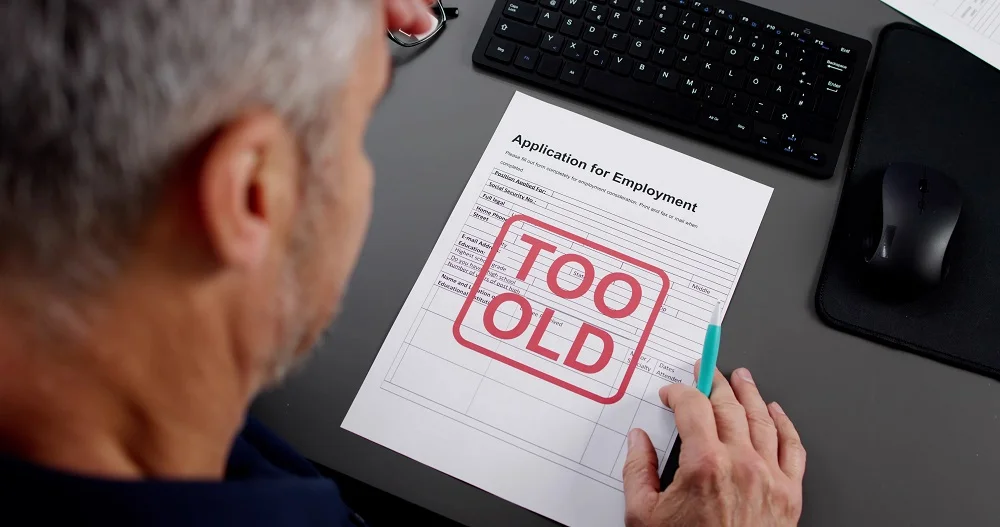
Age discrimination can look like a company laying off employees close to retirement and replacing them with younger hires. It can also look like performance improvement plans applied selectively to older staff, or recruiting language that discourages experienced applicants.
Discrimination Based on Disability Status
The Americans with Disabilities Act protects individuals with disabilities from discrimination in the workplace. If your employer refuses to provide you with a reasonable accommodation, you may have the basis of a lawsuit.
One example of our work in this area concerned a woman who was fired by the MTA after experiencing months of discrimination and a gross failure to accommodate her disability, leading to exacerbated health problems and eventual wrongful termination from her job.
Race Discrimination
If you believe you have been discriminated against because of your race, you may have a civil rights claim against your employer. Overt discrimination can take the form of an employer refusing to hire people of color or racial slurs being used in the workplace. More subtle discrimination can look like being told you are not "appropriate" for a client-facing position despite being fully qualified, being passed over for promotions in favor of less-qualified peers, or being told your hairstyle is "inappropriate". Even in diverse workplaces, racial bias may still be present and actionable.
Discrimination on the Basis of Ethnicity
Discrimination on the basis of ethnicity can look and feel similar to racial discrimination, and these two forms are often interconnected. While race refers to a set number of categories, ethnicity is more specific and lends itself to different forms of stereotyping and adverse treatment.

Discrimination on the Basis of National Origin
National origin is defined as the country where one is born or where one's ancestors are from. Discrimination on this basis can also stem from one's accent, dialect, cultural practices, or appearance. It can also include discrimination based on assumptions about one's citizenship or visa status.
Discrimination on the Basis of Sexual Orientation
It is unlawful for an employer to discriminate against you based on your sexual orientation or perceived sexual orientation, or your marital status. This was confirmed in the Supreme Court's June 15, 2020, decision in Bostock v. Clayton County, which held that the Civil Rights Act protects LGBTQ+ employees from discrimination under federal law. LGBTQ+ employees are fully protected from discrimination in hiring, promotion, compensation, and termination.
Religious Discrimination
Employers with 15 or more employees are required under Title VII to reasonably accommodate an employee's sincerely held religious beliefs or practices, unless doing so would create an undue hardship. Religious discrimination can include refusing to accommodate schedule changes for religious observances, penalizing employees for their religious dress, or creating a hostile environment based on an employee's faith or lack thereof.
AI-Driven Hiring Discrimination and NYC Local Law 144

Many New York City employers now use automated tools to screen job applications, rank candidates, and assess employees for promotion. These AI-driven systems can embed and amplify bias, and New York City was among the first jurisdictions in the country to regulate them.
NYC Local Law 144, which took effect in January 2023 and began enforcement in July 2023, requires employers that use Automated Employment Decision Tools (AEDTs) to conduct annual independent bias audits, make the audit results publicly available, and notify candidates that an automated tool will be used in their evaluation. Candidates also have the right to request an alternative, non-automated assessment process.
If you were rejected for a job or promotion and an automated screening tool was involved, you may have been the victim of algorithmic discrimination. Our attorneys stay current with how this area of law is developing in New York courts and agencies.
How to File an Employment Discrimination Claim in New York
If you believe you have been the victim of employment discrimination, your first step should be consulting an attorney before filing a claim on your own. The agency you file with, the deadlines you face, and the evidence you need to preserve can all affect the strength of your case.
The main agencies handling employment discrimination complaints in New York are:
- Equal Employment Opportunity Commission (EEOC): The federal agency that enforces Title VII, the ADEA, ADA, and other federal laws. In most cases, you must file an EEOC charge within 300 days of the discriminatory act before pursuing a federal lawsuit.
- New York State Division of Human Rights (NYSDHR): Handles claims under the New York State Human Rights Law. The filing deadline is generally one year from the date of the discriminatory act.
- New York City Commission on Human Rights (NYCCHR): Handles claims under the New York City Human Rights Law. The filing deadline is generally one year.
A successful plaintiff may be entitled to reinstatement, back pay with interest, compensatory damages, punitive damages, and attorney's fees.





.svg)
.svg)



.avif)