.svg)


- Loading...
For years, New York counties have faced a critical decision: whether to run jail medical care themselves or outsource it to private, for-profit corporations. Companies like Wellpath and Corizon/YesCare promised counties lower costs and fewer headaches. Instead, countless families have watched loved ones suffer medical neglect behind bars.
Now, with major providers entering bankruptcy, many people are asking the same question: If the company responsible for my injury is bankrupt, is my fight for justice over?
The answer is no. At the Jacob D. Fuchsberg Law Firm, we represent families across New York who have suffered due to this broken system. Our inmate rights attorneys understand that whether the facility is public or private, the standard of care is a constitutional right, not a luxury.
Private vs. Public Jail Healthcare: Why Negligence Happens
When analyzing the quality of care in U.S. prisons, there is a distinct difference in why negligence occurs. Understanding this distinction is critical to building a successful legal case.
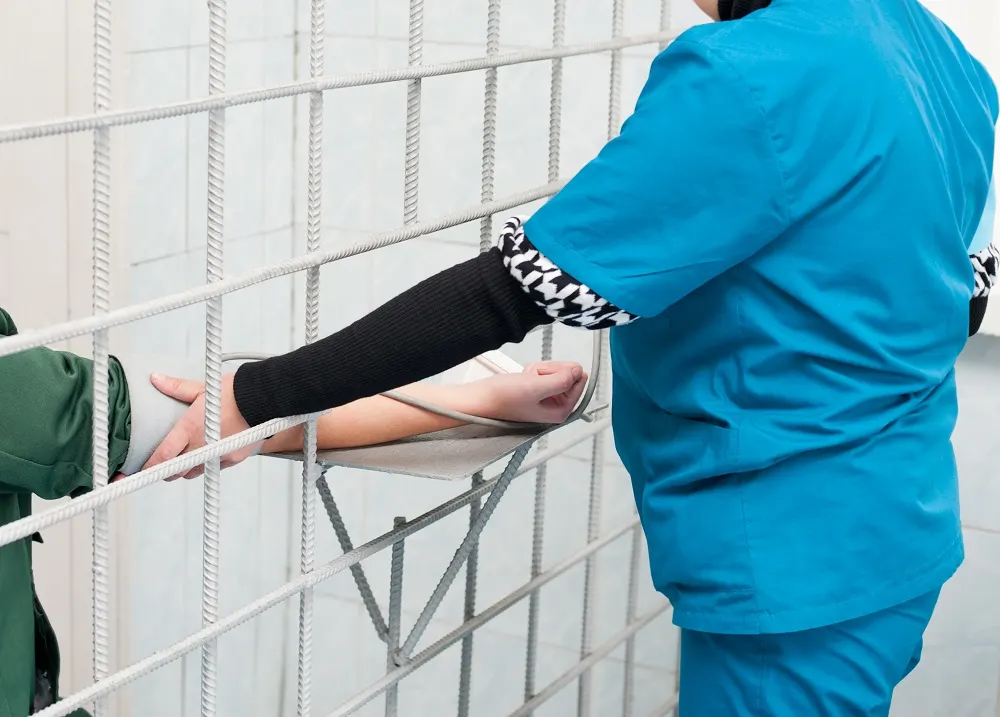
The Private Model: The “Profit” Problem
Private correctional healthcare companies often work under capitation contracts: they are paid a fixed amount per inmate, per day or per year. Every dollar they spend on:
- Hospital transfers
- Specialist consults
- MRI/CT scans
- Extra nursing or mental health staff
directly cuts into their profit margin.
That financial structure can create dangerous incentives:
- Understaffing: Running skeleton crews of nurses and doctors.
- Delaying or denying outside care: Keeping very sick people in their cells instead of sending them to the ER.
- Cutting prescriptions and mental health services: Substituting cheaper medications or abruptly stopping necessary drugs.
- Poor record-keeping: Rushed charting, missing labs, and incomplete medication logs that make it hard to prove what actually happened.
In many of our cases involving private vendors, we see the same patterns: slow responses to medical emergencies, minimal physician involvement, and critical decisions made by non-physicians following cost-driven protocols.
The Public Model: The “Bureaucracy” Problem

When medical care is provided directly by state- or county-employed staff — for example, through systems like NYC Health + Hospitals at Rikers or New York State DOCCS medical staff — the motive is different.
Public providers typically do not profit by denying care. But they operate in large bureaucracies that can fail patients in other ways:
- Staff may be shielded by qualified immunity and union protections, making discipline difficult even after serious mistakes.
- There can be chronic understaffing and burnout, leading to rushed exams and missed warning signs.
- Communication between security and medical can break down, especially when officers dismiss symptoms as “faking it”.
- Paperwork and rigid policies may delay critical treatment, even when individual nurses or doctors want to help.
In our public-system cases, the harm often flows from a culture of indifference and red tape rather than an explicit profit motive.
Which Model Is Worse for Patients?
From the perspective of a family, the outcome is the same: someone who needed medical care did not get it.
However, in our experience:
- Private contractor cases more often involve systemic cost-cutting: Repeated failures to send people out to the hospital, chronic understaffing, and “check-the-box” evaluations that miss serious conditions.
- Public provider cases more often involve bureaucratic neglect: Delayed follow-up, poor coordination, and staff who are difficult to hold accountable without a civil rights lawsuit.
Either way, the law looks at the same core question: Did officials show deliberate indifference to a serious medical need?
The Current Crisis: Bankruptcies and the “Liability Shield”
The reliability of private jail medical contractors has reached a breaking point. After years of lawsuits alleging medical malpractice, wrongful death, and civil rights violations, the very companies that promised to protect counties are collapsing.
- Corizon / YesCare used a controversial restructuring maneuver sometimes called the “Texas Two-Step” — splitting the company into entities, assigning many of the lawsuits to a debt-heavy shell, and putting that entity into bankruptcy.
- Wellpath, one of the largest correctional healthcare providers in the country and a major player in New York and the Hudson Valley, has also sought Chapter 11 bankruptcy protection.
For families, these corporate moves can be terrifying. Many people receive a “Notice of Stay” telling them that their case against the company is frozen because of the bankruptcy.
It can feel like the door to justice has just slammed shut. Legally, it has not.
Can You Still Sue If the Contractor Is Bankrupt?
When a corporation files for bankruptcy, an automatic stay goes into effect. That generally pauses lawsuits against that company — but it does not erase your underlying rights or the harm that was done.
In New York, counties and the State have a non-delegable duty to provide adequate medical care to people in their custody. They cannot escape that duty simply by signing a contract with a private company.
That means you may still have viable claims against:
- The County or Municipality (for example, Orange County, Rockland County, Westchester County)
- The State of New York, in some prison cases
- Individual medical providers (doctors, nurses, physician assistants)
- Correctional officers or supervisors who ignored or obstructed care, or made decisions to deny medical care
The key is to reframe and redirect your legal claims so they focus on the government’s responsibility and the broader system failures — not just the private corporation’s misconduct.
The Legal Pivot: How Jacob D.Fuchsberg Law Firm Fights Back
At the Jacob D. Fuchsberg Law Firm, we do more than name a private company in a complaint and hope for a settlement. We build cases that recognize the full chain of responsibility.
Suing the County Under § 1983 and Monell
Under 42 U.S.C. § 1983, you can sometimes hold a municipality liable if:
- The County knew, or should have known, that its contractor was providing substandard medical care, and
- The County continued the relationship anyway, or failed to fix obvious problems.
We often look for:
- New York State Commission of Correction (SCOC) reports flagging serious deficiencies in jail medical care.
- Prior lawsuits, grievances, and news reports about the contractor at the same facility.
- Contract renewals showing that the County ignored red flags and chose to renew for cost reasons.
This is called Monell liability — and it can allow us to sue the County directly, even when the private company is in bankruptcy.
Piercing the “Sham” Professional Corporation
To comply with New York’s corporate practice of medicine laws, correctional health companies often operate through professional corporations (P.C.s) that appear independent but are, in practice, tightly controlled by the parent company.
We scrutinize these structures closely:
- Who really controlled clinical policies and staffing?
- Was the P.C. adequately capitalized, or was it just a legal fig leaf?
- Did the structure exist primarily to shield profits and avoid liability?
Where appropriate, we argue that these arrangements are sham entities and push courts to look beyond the paper structure to the reality of control and responsibility.
Our Track Record: Fighting for Inmate Health

At the Jacob D. Fuchsberg Law Firm, we do not just talk about these issues; we litigate them. We have secured millions of dollars for inmates and their families who were ignored by the system.
- $950,000 settlement (delayed cancer diagnosis): We represented a young man whose cancer progressed to Stage 4 after prison staff ignored months of worsening symptoms. We proved that the failure to investigate his condition constituted a violation of his civil rights.
- $999,000 settlement (Rikers Island negligence): We secured nearly $1 million for a man who suffered severe neck trauma and lost basic mobility after correctional staff failed to intervene during a violent assault.
Every case is different, and these results do not guarantee a similar outcome in your case. But they reflect our firm’s commitment to digging into the system, not just the individual error.
What to Do If You Suspect Medical Neglect in a New York Jail
If you or a loved one has been denied medical care in a New York jail or prison, the steps you take now can make a significant difference later:
Document Everything
Save letters, emails, and messages from your loved one. Write down dates, names of staff, and what was reported (“couldn’t breathe”, “chest pain”, “vomiting blood”, etc.).
Request Records When Possible
Medical records, grievance forms, and incident reports can be powerful evidence, even if you cannot obtain all of them right away. We can often subpoena records directly from the jail, contractor, or hospital.
Act Quickly
There are strict deadlines for filing claims against counties and the State of New York. Speaking with an experienced civil rights and medical malpractice attorney as early as possible helps protect your rights.
Talk to a Law Firm That Understands Both Medicine and Civil Rights
Jail medical cases sit at the intersection of medical malpractice and constitutional law. Our team is familiar with private contractors, public systems, Monell claims, and New York’s unique procedural rules.
Contractor Bankruptcy Doesn’t End Your Case
Received a Notice of Stay because Wellpath or Corizon filed for bankruptcy? That does not mean your case is over. Contact our NYC inmate rights lawyers for a consultation!
We Fight for Justice After Jail Deaths
If your loved one died in a New York jail or prison, you may be entitled to a wrongful death and civil rights claim — even if the medical contractor is bankrupt.
Conclusion: Bankruptcy Doesn’t Erase Responsibility
The collapse of private jail healthcare companies does not erase the suffering they caused — and it does not let New York counties off the hook.
At the Jacob D. Fuchsberg Law Firm, we are actively litigating cases involving both private contractors and public providers. Whether your case involves Wellpath, Corizon/YesCare, or in-house medical staff, we know how to hold the responsible parties accountable.
If you or a loved one suffered medical neglect behind bars in New York, contact us today for a free consultation.