.svg)


- Loading...
Medical care doesn’t stop at the prison gate. People who are incarcerated lose many freedoms, but they do not lose the right to basic medical treatment. However, the harsh reality is that in many correctional facilities, medical care is slow, inconsistent, or altogether inaccessible, especially for mental health and chronic conditions.
At Jacob D. Fuchsberg Law Firm, our inmates’ rights attorneys represent incarcerated individuals and their families when prisons fail to provide necessary medical care. Here, we’ll explain prisoners' rights to medical care and how to assert them.
Prisons Must Provide Medical Care
When the government takes a person into custody in a correctional setting, such as a prison, jail, or detention center, it assumes responsibility for that person’s safety and health. In practical terms, this means that incarcerated individuals must be granted access to reasonable medical services, such as:
- Sick calls
- Evaluation by qualified clinicians
- Necessary testing
- Appropriate treatment
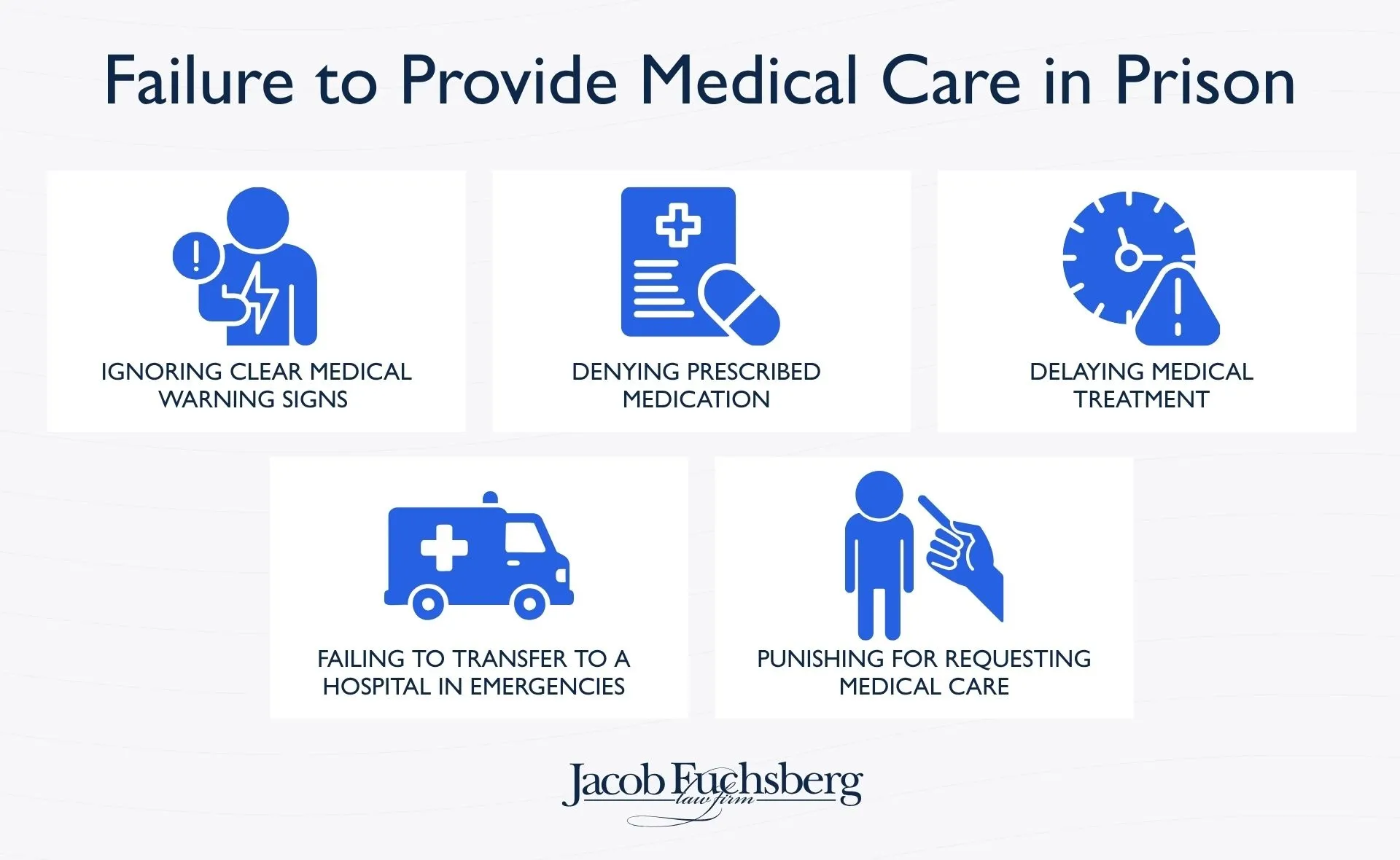
The government must meet inmates’ medical needs in a way that protects their health and human dignity. Denying needed care — or delaying it until it becomes an emergency — can cross a legal line.
Inmates Are Protected by the Constitution
The key legal protection regarding prisoners’ rights to medical care is the Eighth Amendment, which prohibits cruel and unusual punishment.
In a 1976 decision, the U.S. Supreme Court held that “deliberate indifference” to a prisoner’s serious medical needs is a form of cruel and unusual punishment and, therefore, is a violation of the Eighth Amendment.
“Deliberate indifference” is more than a mistake. It generally means that prison authorities or providers knew of a serious risk and still failed to respond meaningfully.
Here is what deliberate indifference may look like in practice:
- An inmate with HIV or an organ transplant requires a strict daily medication regimen to prevent immune system failure or rejection. Despite having the prescription on file, prison medical staff fail to order the drugs or continuously "forget" to dispense them for several days. This causes the inmate's health to rapidly deteriorate.
- An outside specialist diagnoses an inmate with a severe, painful hernia and recommends a specific, necessary surgery. Prison administrative or financial authorities override the medical recommendation, refusing to pay for the procedure or transportation. They force the inmate to endure prolonged, severe pain without an alternative treatment plan.
- An inmate is placed on suicide watch and exhibits active warning signs (e.g., attempting self-harm or explicitly stating an intent to end their life). Despite this known severe risk, guards fail to conduct mandated cell checks, remove hanging hazards from the cell, or notify mental health professionals, leading to a foreseeable suicide attempt.
This kind of reckless disregard is where neglect becomes a civil rights issue, not just the result of poor monitoring of inmates in a bad system.
What Medical Care Includes in Prisons
Prison healthcare should meet the medical needs of inmates. While procedures may be adjusted for the sake of security, prisons may not use security risks as an excuse to deny treatment.
Medical services in correctional facilities should cover the following areas.

Medical Treatment for Physical Conditions
Many prisoners arrive with gaps in prior access to healthcare, which contributes to health disparities. Incarcerated people have high rates of chronic conditions like diabetes, hypertension, asthma, and heart disease. Additionally, they may experience pain and complications due to untreated injuries, whether these injuries happened before or during incarceration.
A functional correctional healthcare system should provide:
- Timely clinical evaluations and follow-ups
- Necessary medications and monitoring
- Access to specialists when indicated
- Continuity of care after transfers between facilities
Unfortunately, researchers have found that chronic conditions are drastically undertreated among inmates compared to the overall U.S. population.
Mental Health Services
Incarcerated people have higher rates of serious mental illnesses, histories of trauma, and co-occurring substance use disorders. Still, mental health is consistently undertreated in correctional facilities.
Medical care for prison inmates should include:
- Mental health screening and crisis response
- Appropriate therapy and medication management
- Suicide prevention measures, when appropriate
- Treatment plans that don’t rely on isolation as the default
Solitary confinement can worsen symptoms like anxiety, depression, and psychosis, and it can increase the risk of self-harm and suicidal behavior. When isolation is used in place of treatment, the harm can be profound.
Substance Use, Overdose, and Withdrawal Management

A significant number of individuals enter the correctional system with substance use disorders. Drug withdrawal is a serious medical condition that can be life-threatening if not managed properly, yet many facilities fail to provide timely intervention. Furthermore, the risk of overdose remains high within many facilities.
A humane and legally compliant system must provide:
- Intake screening: Identifying individuals at risk for withdrawal upon arrival.
- Supervised detox: Providing medical protocols to prevent seizures, dehydration, or death during withdrawal.
- Emergency response: Ensuring immediate access to Naloxone (Narcan) and hospital transport for overdoses.
- Access to MAT: Offering Medication-Assisted Treatment (MAT) for opioid use disorders.
Depending upon the facts of the case, it could constitute a "deliberate indifference" to an inmate's safety.
Infectious Disease and Public Health Management
Correctional settings are a major public health pressure point because infectious diseases spread more easily in crowded environments. Poor ventilation, limited sanitation control, and delays in testing can compound this risk. Common concerns include sexually transmitted infections, tuberculosis, and hepatitis C.
A humane medical system for inmates should offer:
- Education and prevention efforts that protect prisoners and the broader community
- Screening and testing when there is a known risk of exposure
- Timely treatment to reduce complications and prevent spread
Despite the CDC’s recommendations to improve infection prevention and control in prisons, the correctional system lags behind.
Reproductive Healthcare for Women Prisoners
Women prisoners have specific healthcare needs that are often neglected in a system designed around male populations. That includes reproductive health, prenatal care, postpartum care, and dignity-focused gynecologic care.
Facilities should provide:
- Pregnancy testing and prenatal medical treatment
- Safe management of high-risk pregnancies
- Access to necessary medications and follow-ups
- Basic menstrual health supplies and related medical care
When pregnancy-related medical needs are ignored, outcomes can be dangerous for both mother and baby.
Disability Rights in Prisons and Jails
People in custody also have rights under disability law, including equal access to programs and services.
Title II of the ADA applies to state and local correctional facilities. This law covers limited mobility, vision or hearing impairment, severe mental illness, and other disabilities. The ADA matters when a prisoner is denied access to healthcare, assistive devices, or safety measures because the facility doesn’t want to deal with accommodating their disability.
What Prison Medical Malpractice Can Look Like
Not every bad medical outcome equals malpractice. However, prison medical malpractice becomes a serious concern when clinical care or facility policies fall below basic standards and cause harm.
Common examples include:
- Misdiagnosis or failure to diagnose a serious condition
- Delays in treatment that allow a condition to worsen
- Medication errors, such as administering the wrong dose or wrong drug, or failing to recognize a dangerous drug interaction
- Failure to monitor a known high-risk condition
- Refusing to provide care based on cost, convenience, or punishment rather than medical judgment
Some cases of medical malpractice involve an individual provider who delivers substandard care. Other times, the cause is an institutional problem, such as understaffing, poor training, or a culture where requests for care are treated as manipulation.
What to Do If an Incarcerated Person Is Being Denied Medical Care
If you’re an incarcerated person or a loved one trying to help, focus on building a clear, documented record.
These practical steps often matter:
- Request medical care in writing when possible; use sick call slips or grievance forms.
- Describe symptoms specifically, including when they started, what’s worsening, and how they limit function.
- Keep track of dates, names, and responses from staff.
- Request copies of medical records.
- If a condition is urgent (severe pain, breathing issues, neurological symptoms), escalate immediately through any available channel.
Depending on the circumstances, you may have to exhaust internal grievance procedures first before filing a federal civil rights claim.
If Your Loved One Suffered Neglect in a Correctional Facility
If an incarcerated person was denied medical treatment, faced dangerous delays, or suffered harm after repeated requests for care, contact our legal team to discuss whether you have a case.
Were Medical Needs Ignored in Jail or Prison?
When prison authorities or medical providers fail to provide basic treatment, delay care until the harm becomes irreversible, or disregard obvious medical needs, prisoners suffer injuries that never should have happened.
At Jacob D. Fuchsberg Law Firm, we know that the stakes are high and the power imbalance is real. Our inmates’ rights lawyers take cases involving serious medical neglect and preventable harm in correctional settings seriously.
Legal accountability is often the only way to push the system to do what it is required to do: provide necessary medical care to people in custody. Contact us for a free, confidential case review.