.svg)

- Loading...
Bringing a child into the world should be one of life’s safest milestones. Yet for many families, giving birth can involve serious and even life-threatening complications. While modern medicine has dramatically improved maternal and child health, certain conditions during labor and delivery remain extremely dangerous when they’re missed, delayed, or improperly managed.
Below, we break down the most dangerous childbirth complications, what causes them, why they happen, and why early detection and proper medical care can make the difference between recovery and tragedy. At Jacob D. Fuchsberg Law Firm, our birth injury lawyers fight to hold negligent medical providers accountable and pursue compensation for families harmed by preventable delivery errors.
Why Childbirth Can Still Be Dangerous
The United States has the highest rate of maternal mortality among industrialized nations. Each year, roughly 700 women die from pregnancy- or childbirth-related causes. For every maternal death, up to 70 women experience severe maternal morbidity, including complications such as hemorrhage, organ failure, or emergency surgeries.
Public health data suggest that more than 80% of pregnancy-related deaths in the U.S. are potentially preventable with earlier detection, proper prenatal care, timely intervention, and consistent monitoring during labor and delivery. When these systems fail, the consequences can be devastating for both you and your baby.
Uterine Rupture
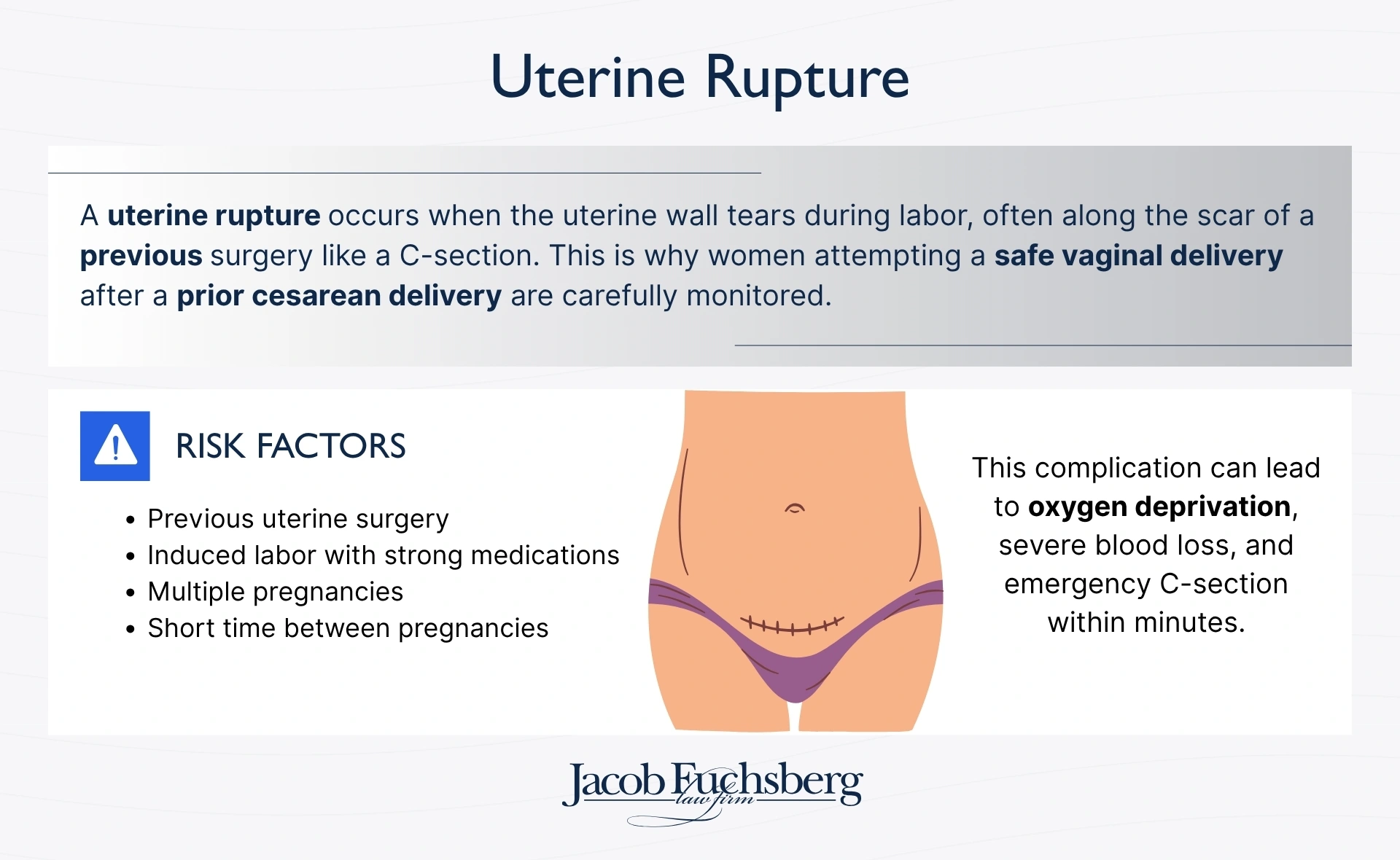
Uterine rupture is one of the most dangerous emergencies in childbirth. It occurs when the uterine wall tears during labor, often along a scar from a previous uterine surgery, such as a prior cesarean delivery.
This complication can cause sudden blood loss, oxygen deprivation to the baby, and rapid deterioration of the mother’s condition. A ruptured uterus disrupts blood vessels, compromises amniotic fluid, and often requires an immediate emergency C-section.
Women attempting a vaginal delivery after previous surgery face a greater risk, especially if labor is induced or contractions become too intense.
Amniotic Fluid Embolism
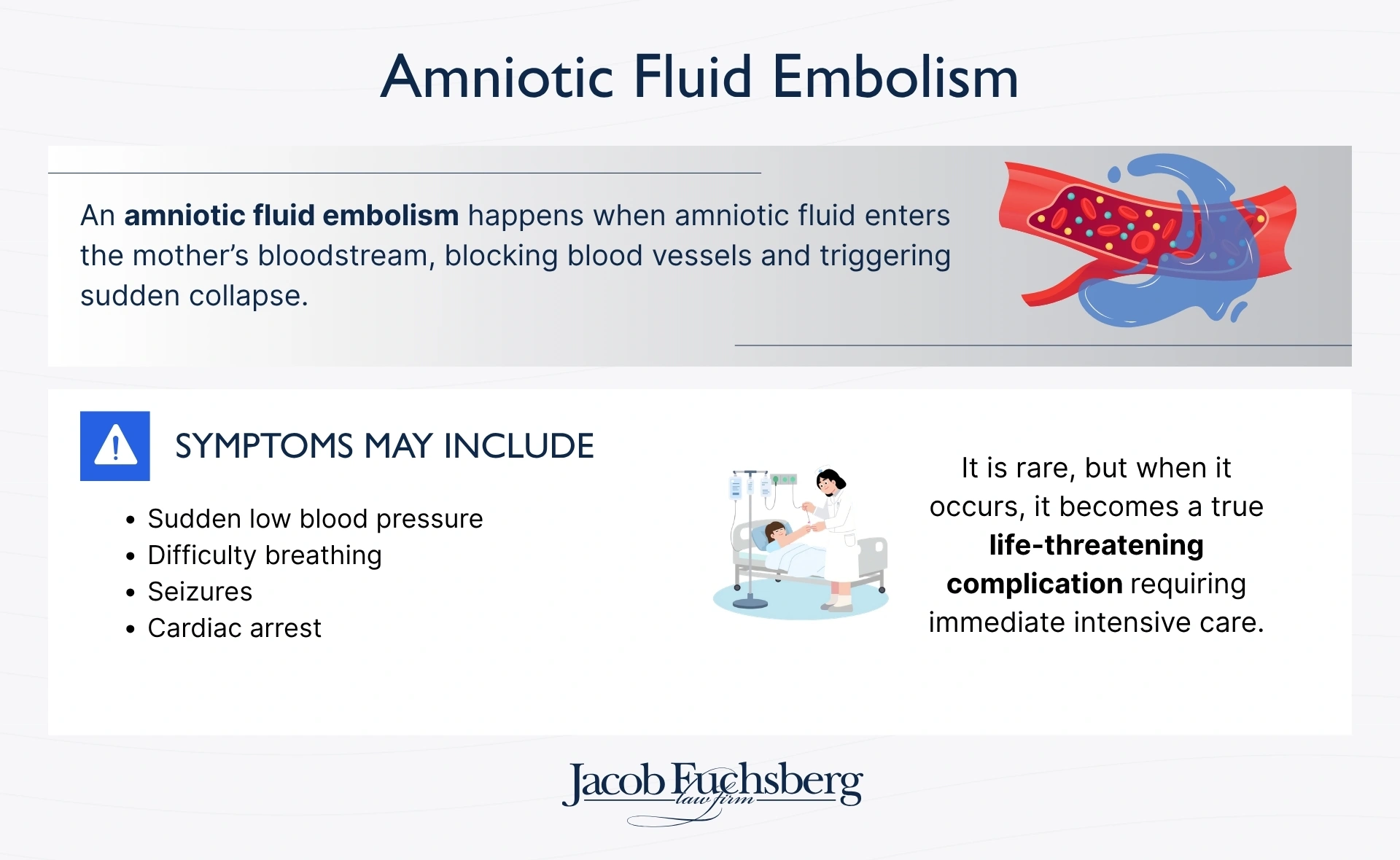
An amniotic fluid embolism is rare but frequently fatal. It happens when amniotic fluid or fetal cells enter the mother’s bloodstream, triggering a catastrophic reaction affecting the lungs, heart, and clotting system.
Symptoms may include sudden shortness of breath, low blood pressure, cardiac collapse, organ failure, and severe bleeding. In many severe cases, this condition leads to maternal death or permanent neurological injury.
Even with rapid intervention, this is one of the most life-threatening childbirth complications known in modern medicine.
Severe Hemorrhage and Excessive Bleeding
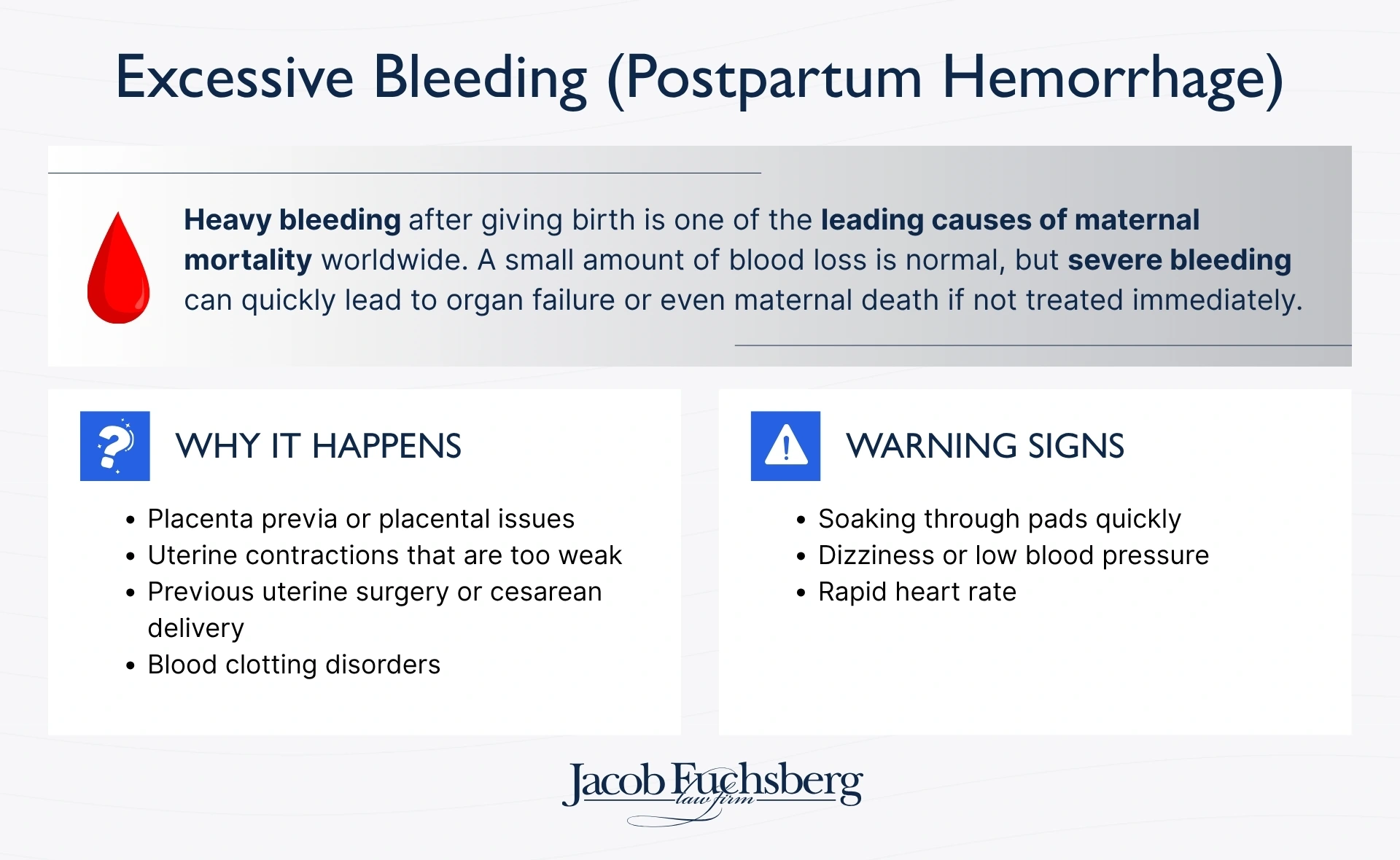
Excessive bleeding, also called postpartum hemorrhage, remains a leading cause of maternal mortality worldwide. Heavy bleeding can occur during or after delivery due to uterine atony, retained placenta, uterine tears, or clotting disorders.
When blood loss is not controlled quickly, mothers may require blood transfusions, emergency surgery, or intensive care. Severe hemorrhage can progress to shock and even death if medical teams fail to act promptly. Warning signs such as rapid heart rate, dizziness, and dropping blood pressure should never be ignored.
Placenta Previa
Placenta previa occurs when the placenta partially or fully covers the vaginal opening, blocking the baby’s exit through the birth canal. This condition often causes painless but heavy bleeding late in pregnancy or during labor.
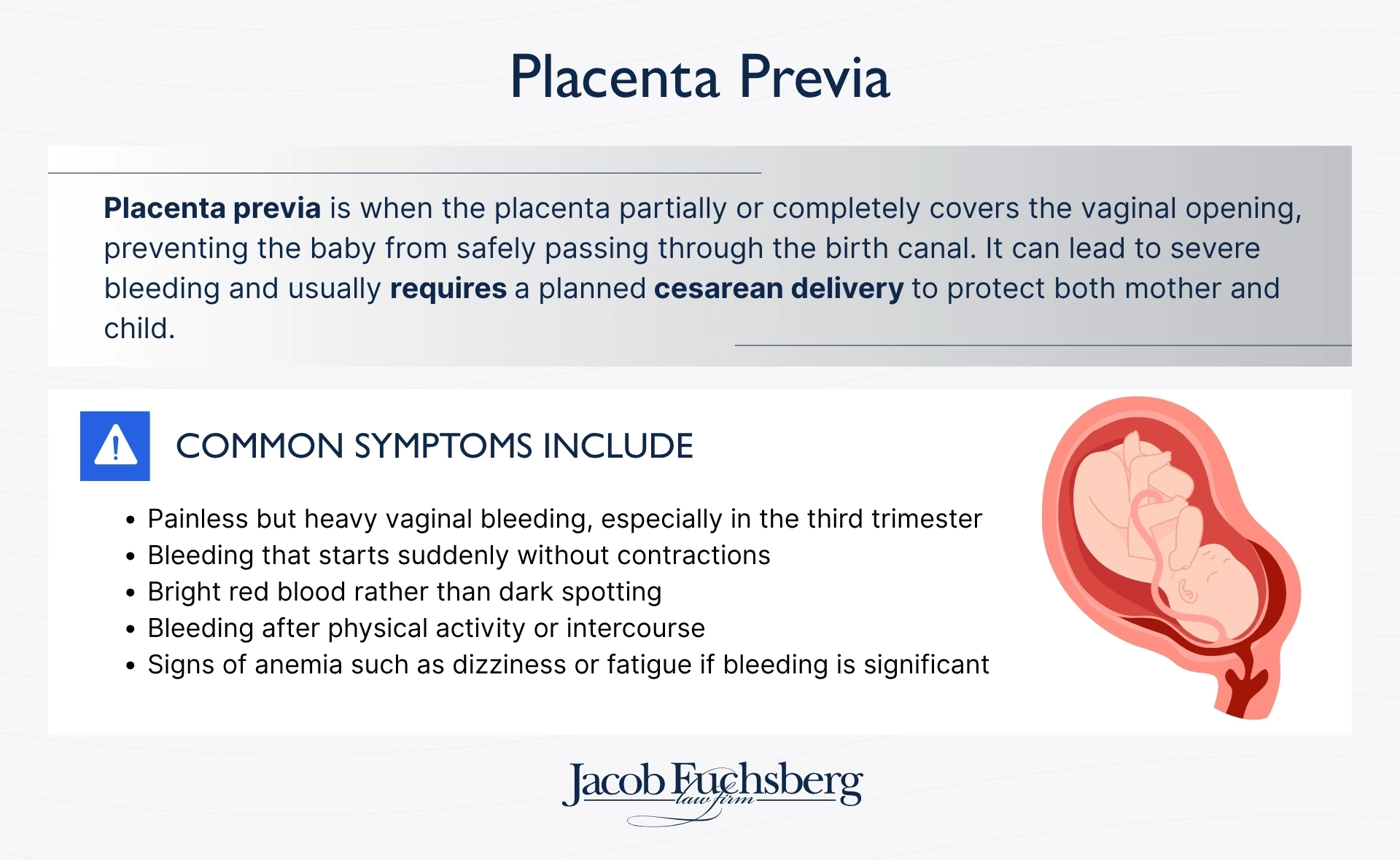
Attempting a safe vaginal delivery in these cases can be extremely dangerous. Most patients with placenta previa require a planned cesarean delivery to protect both the mother’s body and the baby’s health. Failure to diagnose placenta previa during routine ultrasounds is a serious lapse in standard care.
Cord Prolapse and Umbilical Cord Complications
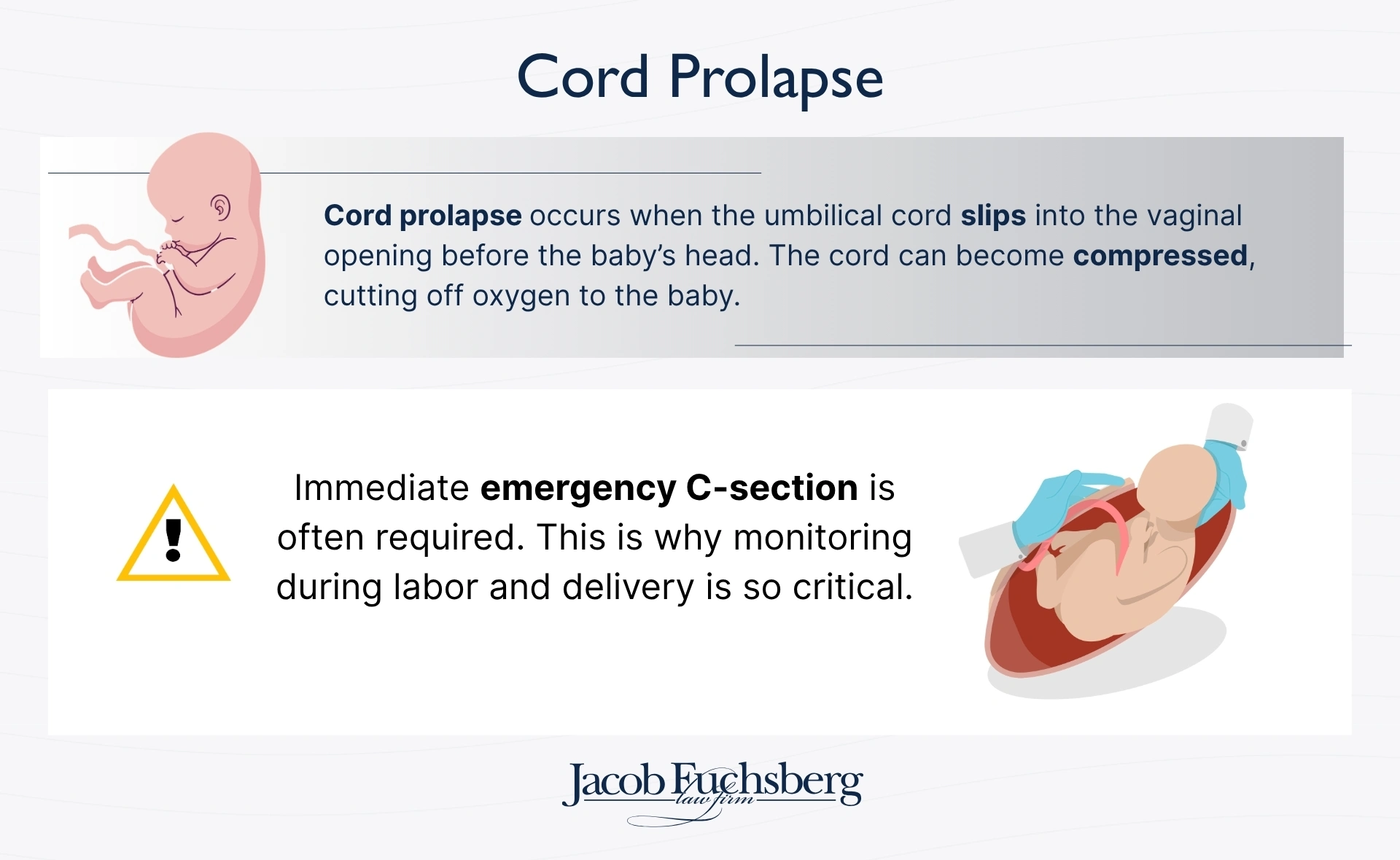
A cord prolapse happens when the umbilical cord slips into the mother’s birth canal ahead of the baby, placing pressure on the cord. Cord complications often demand an emergency C-section.
Medical professionals are trained to monitor fetal heart rate changes that signal this problem. Without immediate intervention, the baby can suffer severe oxygen deprivation, brain injury, or death. Delayed action can be catastrophic.
Shoulder Dystocia
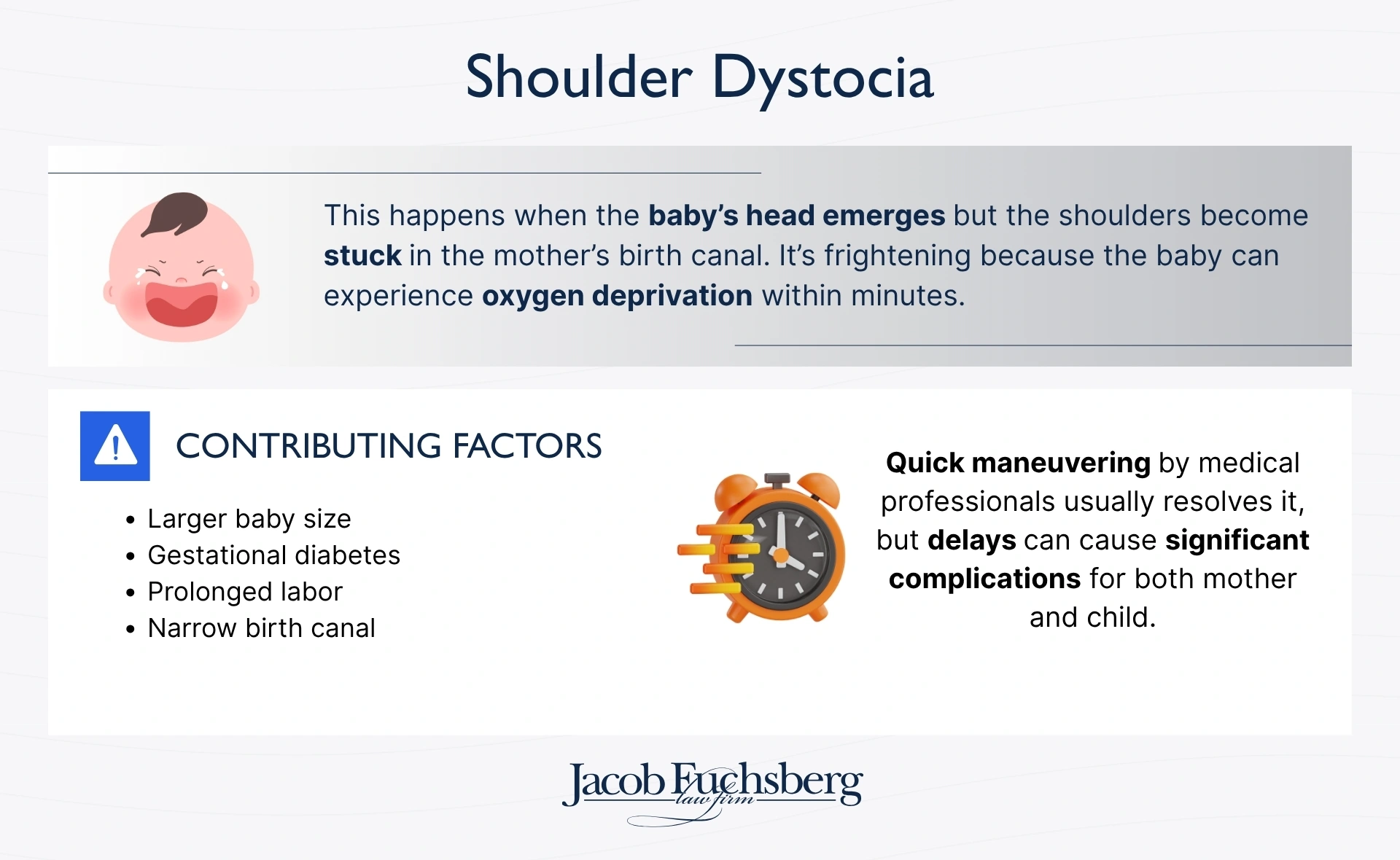
Shoulder dystocia occurs when the baby’s head delivers, but the shoulders become stuck behind the pelvic bone. For the mother, aggressive maneuvers may result in tearing, severe bleeding, or damage to surrounding tissues. For the baby, the risk includes fractures, permanent nerve injury, or lack of oxygen.
The risk of shoulder dystocia increases with gestational diabetes, larger babies, and prolonged labor, making careful monitoring essential.
Preeclampsia and Dangerously High Blood Pressure
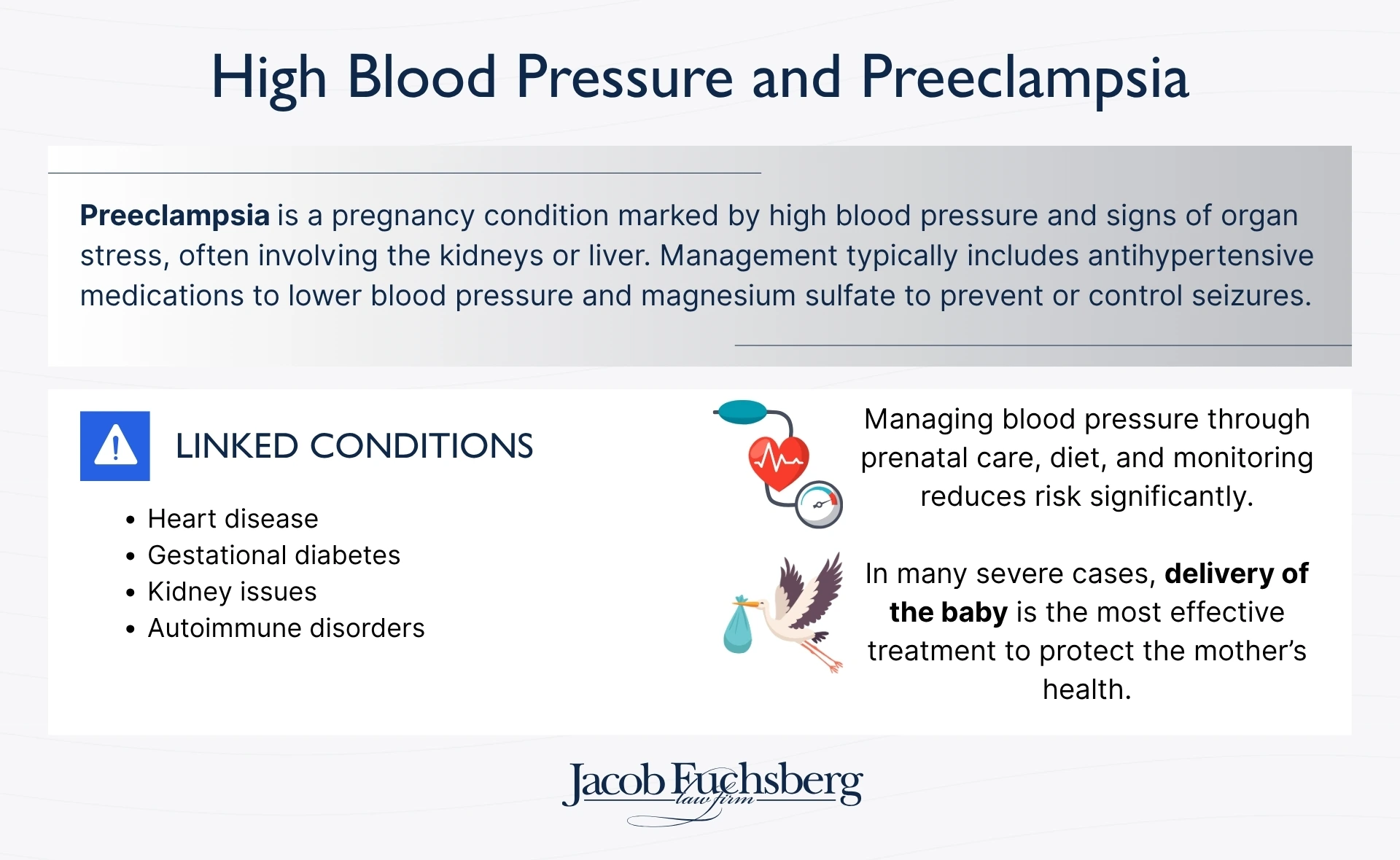
High blood pressure during pregnancy, especially preeclampsia, can escalate quickly into seizures, stroke, or organ failure. Symptoms often include swelling, vision changes, and a severe headache.
Unchecked blood pressure problems put both mother and baby at higher risk of placental abruption, premature delivery, and maternal death.
Routine physical exams, monitoring, and early detection are key to preventing catastrophic outcomes.
Blood Clots and Cardiovascular Complications
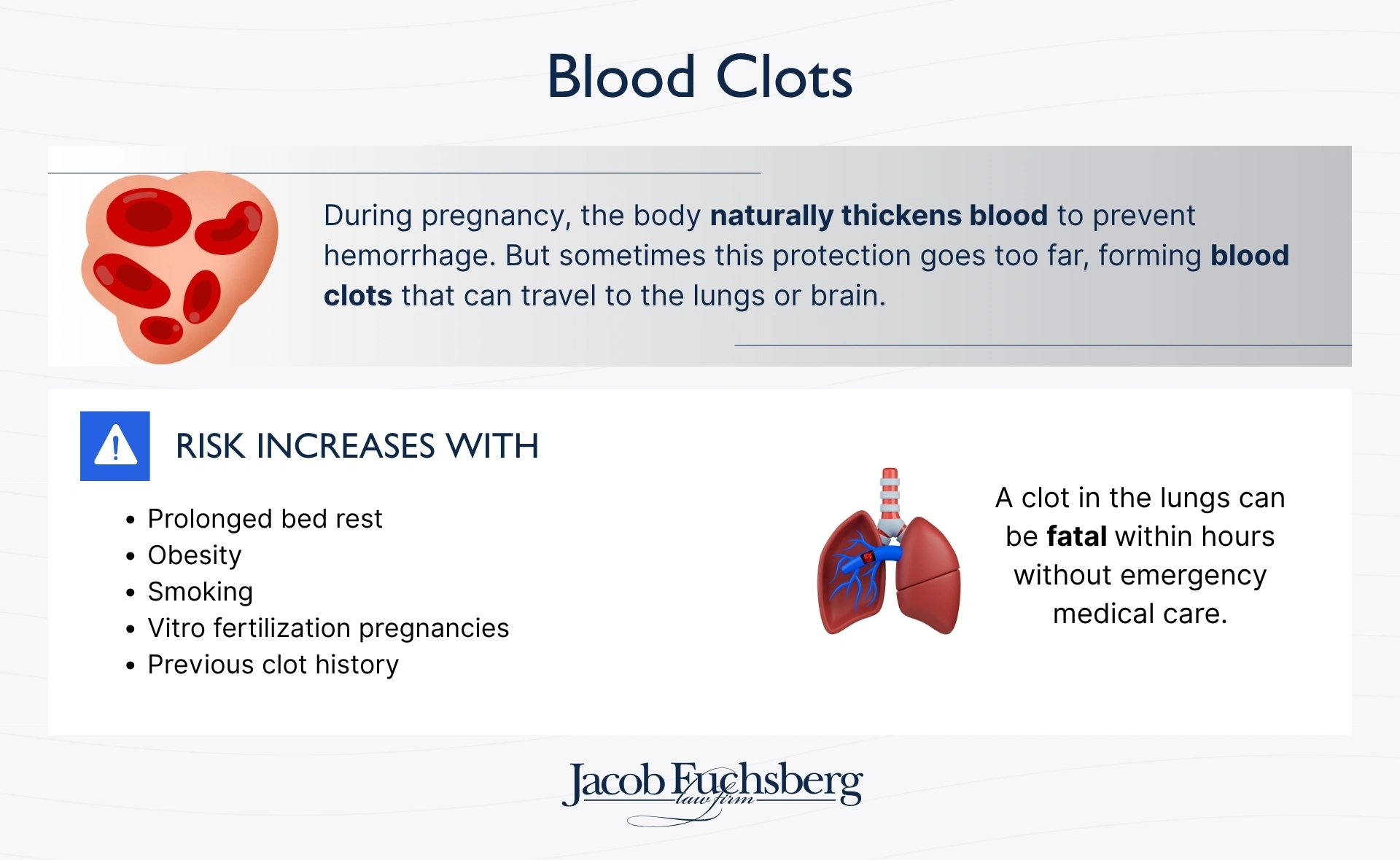
Pregnancy increases the risk of blood clots, which can travel to the lungs or heart. Women with heart disease, clotting disorders, or prolonged bed rest face heightened danger.
A clot blocking major blood vessels can cause sudden collapse, stroke, or death. These complications are often avoidable with proper screening and preventive care.
Preterm Labor and Complications in Premature Babies
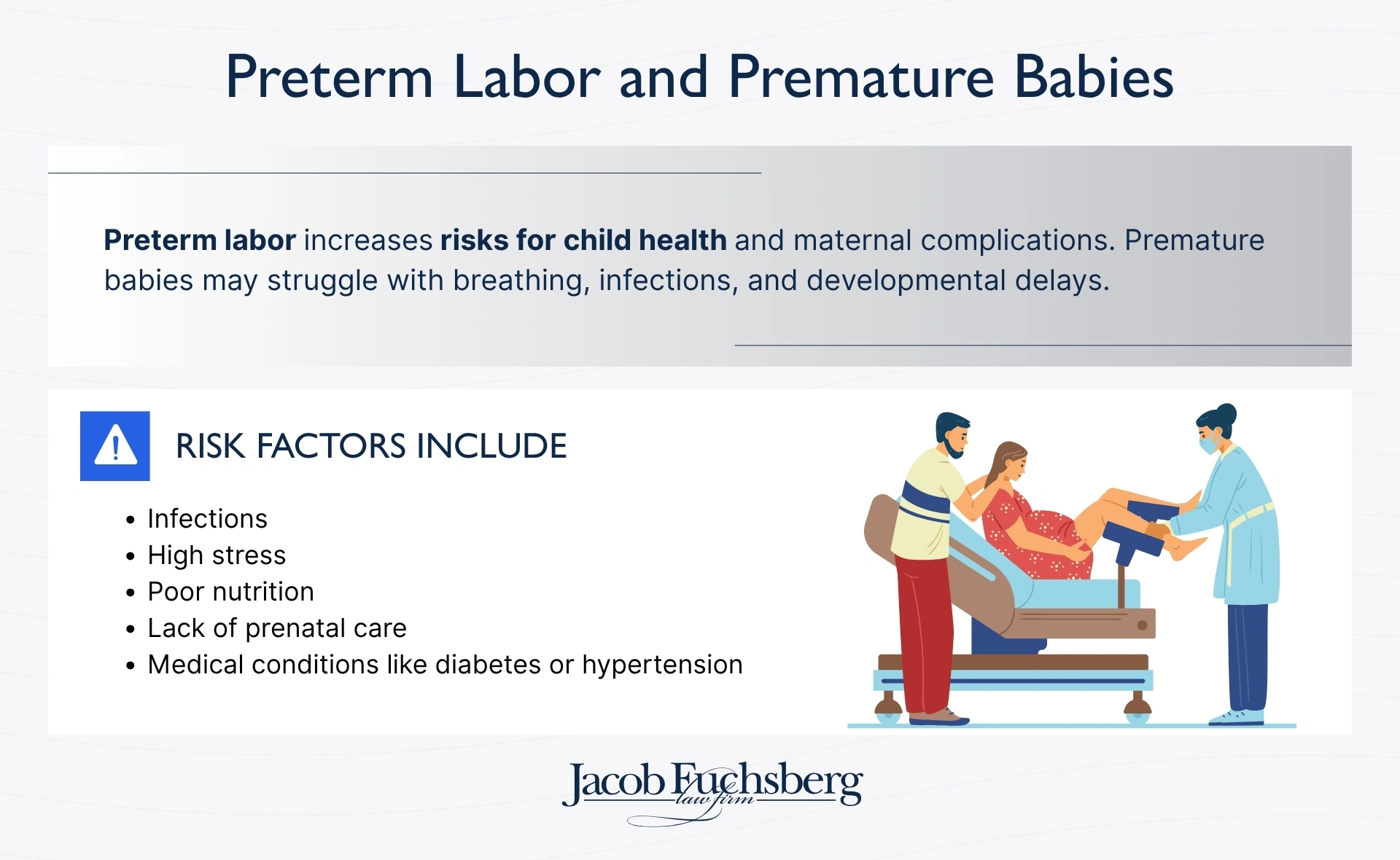
Preterm labor exposes premature babies to higher risks of breathing problems, infections, and long-term developmental challenges. For mothers, early labor can be linked to infections, uterine abnormalities, or poorly managed medical conditions.
Timely intervention can delay delivery long enough to improve outcomes. Missed warning signs or dismissed symptoms place both lives at risk.
When Warning Signs Are Ignored
Many of the most severe childbirth complications don’t appear without notice. In many cases, there are clear warning signs long before a crisis happens. Medical professionals should be watching for abnormal lab results, persistent or worsening pain, unusual bleeding, changes in the baby’s heart rate, or repeated symptoms reported during prenatal visits. These signals should trigger closer monitoring, additional testing, or immediate intervention.
The danger arises when those warnings are dismissed or overlooked. When medical providers fail to listen, fail to order the right tests, or fail to act quickly, once-manageable conditions can escalate into life-threatening emergencies. What doctors could have prevented with timely medical care may instead result in permanent injury to the mother, the child, or both.
An experienced medical malpractice lawyer can make a real difference for families affected by birth complications. They can review medical records, consult independent experts, and determine whether providers ignored warning signs or failed to adhere to protocols.
Beyond seeking birth injury compensation, hiring a medical malpractice lawyer is about uncovering the truth, holding negligent parties responsible, and helping families move forward after a preventable childbirth injury.
FAQ
FAQs About Dangerous Childbirth Complications
What is severe maternal morbidity?

Severe maternal morbidity refers to life-threatening health events that occur during pregnancy or childbirth but do not result in death. Examples include massive blood loss, emergency hysterectomy, organ failure, or the need for blood transfusions. The prevalence of these complications has risen in recent decades.
What is postpartum hemorrhage?
Postpartum hemorrhage is blood loss of 1,000 milliliters (about one liter) or more within 24 hours after birth, or any blood loss accompanied by signs of shock. It is the most common obstetric emergency worldwide and a leading cause of maternal mortality. The primary reason it occurs is uterine atony, which means the uterus fails to contract properly after delivery.
What is uterine rupture?
Uterine rupture is a rare but extremely dangerous complication where the uterine wall tears open during labor. It can cause severe bleeding, oxygen deprivation for the baby, and immediate threats to both lives. The risk is higher in women with previous uterine surgery, such as a prior C-section.
What is shoulder dystocia?
Shoulder dystocia occurs during vaginal delivery when the baby’s shoulder becomes stuck behind the mother’s pelvic bone after the head has been delivered. This emergency can lead to oxygen deprivation, nerve injuries, or fractures. Management often involves specialized maneuvers like the McRoberts position and suprapubic pressure.
What is amniotic fluid embolism?
Amniotic fluid embolism is a rare but frequently fatal complication in which amniotic fluid or fetal cells enter the mother’s bloodstream. Symptoms may include sudden cardiovascular collapse, respiratory failure, and severe bleeding. Treatment focuses on emergency supportive care such as mechanical ventilation and blood transfusions.
How does a lack of oxygen affect a newborn?
When oxygen flow is restricted during labor, a baby may develop hypoxic-ischemic encephalopathy (HIE), a type of brain injury. HIE can lead to cerebral palsy, developmental delays, or permanent neurological disabilities. Continuous fetal monitoring during childbirth is one way medical teams detect early signs of distress.
What lifestyle factors can increase childbirth risks?
Extreme fatigue, high stress, poor nutrition, smoking, alcohol use, illegal drug use, and untreated infections all increase the likelihood of complications. A pre-pregnancy BMI of 30 or higher also raises risk levels. Getting adequate folic acid intake, eating a balanced diet, and avoiding harmful substances help support safer pregnancies.
Are C-sections safer than vaginal delivery?
Both delivery methods carry risks. Vaginal births may result in physical trauma, such as perineal tears, while C-sections carry surgical risks, including blood clots and infections. The U.S. C-section rate is higher than that of many European countries, with nearly one in three births involving the procedure. The safest option depends on the individual's medical situation.
Do You Suspect Malpractice Occurred During Your Pregnancy or Delivery?
You don’t have to figure this out alone. Our experienced legal team can investigate what happened, identify responsible parties, and help you pursue accountability and financial recovery for your family. We’re prepared to negotiate on your behalf or litigate if necessary.
Was Your Childbirth Injury Caused by a Medical Mistake?
At Jacob D. Fuchsberg Law Firm, we understand how quickly joy can turn into heartbreak when childbirth goes wrong. Families trust hospitals and medical professionals during one of the most vulnerable moments of their lives. When that trust is broken, the consequences can be permanent.
Our firm has decades of experience handling complex birth injury and medical malpractice cases involving life-threatening complications, severe injuries, and wrongful death. We help families seek answers, justice, and the financial support they need.
You can depend on us to fight tirelessly on your behalf. Contact us today to schedule a free consultation and get the legal support you and your loved ones deserve.