.svg)

- Loading...
Understanding the distinction between negligence and malpractice is necessary for legal professionals and patients. While both terms are often used interchangeably, they have important legal and medical differences.
In this blog, we will explore the nuances between medical malpractice and negligence, so you can better understand how these legal terms apply to your case. If you need advanced legal guidance, reach out to our New York medical malpractice attorneys for a consultation.
What Is Negligence?
Negligence is a fundamental legal concept that applies when a person or entity fails to exercise reasonable care, harming another person. It is not necessarily malicious or intentional, but occurs when a reasonable standard of care is not met, leading to injury or damage.
What Is Medical Negligence?

Medical negligence is a specific type of negligence that occurs in healthcare settings. It involves a healthcare provider failing to meet the standard of care expected in the medical field, which leads to harm or injury to the patient. This type of negligence does not involve malicious intent but still results in damage. Medical negligence cases often involve complex legal and medical evaluations to determine liability.
Examples of Medical Negligence
Medical negligence can take many forms, often resulting in serious consequences for patients. Below are some common examples of how negligence can manifest in healthcare settings.
- Failing to diagnose a condition promptly
- Misreading medical tests or lab results
- Making mistakes during surgery due to oversight or lack of care
What Is Medical Malpractice?

Medical malpractice is a more specific and severe form of negligence. It happens when a healthcare provider fails to follow accepted medical practices, causing harm to the patient. Unlike negligence, malpractice is often linked to intentional misconduct or reckless disregard for a patient's safety.
Examples of Medical Malpractice Claims
Here are three striking examples of medical malpractice claims:
- Surgical errors: A surgeon performing an operation on the wrong part of the body or leaving surgical instruments inside the patient’s body after the procedure.
- Failure to obtain informed consent: A doctor performing a procedure without fully informing the patient about the risks, benefits, and alternatives can lead to legal complications if the patient is harmed.
- Prescription errors: A doctor prescribing the wrong medication or the incorrect dosage, resulting in harm to the patient due to adverse reactions or side effects.
Negligence vs. Malpractice: Understanding the Key Differences
The difference between medical malpractice and negligence lies in significant legal distinctions. While both involve harm caused by healthcare providers, they primarily differ in the level of intent and the severity of the actions.
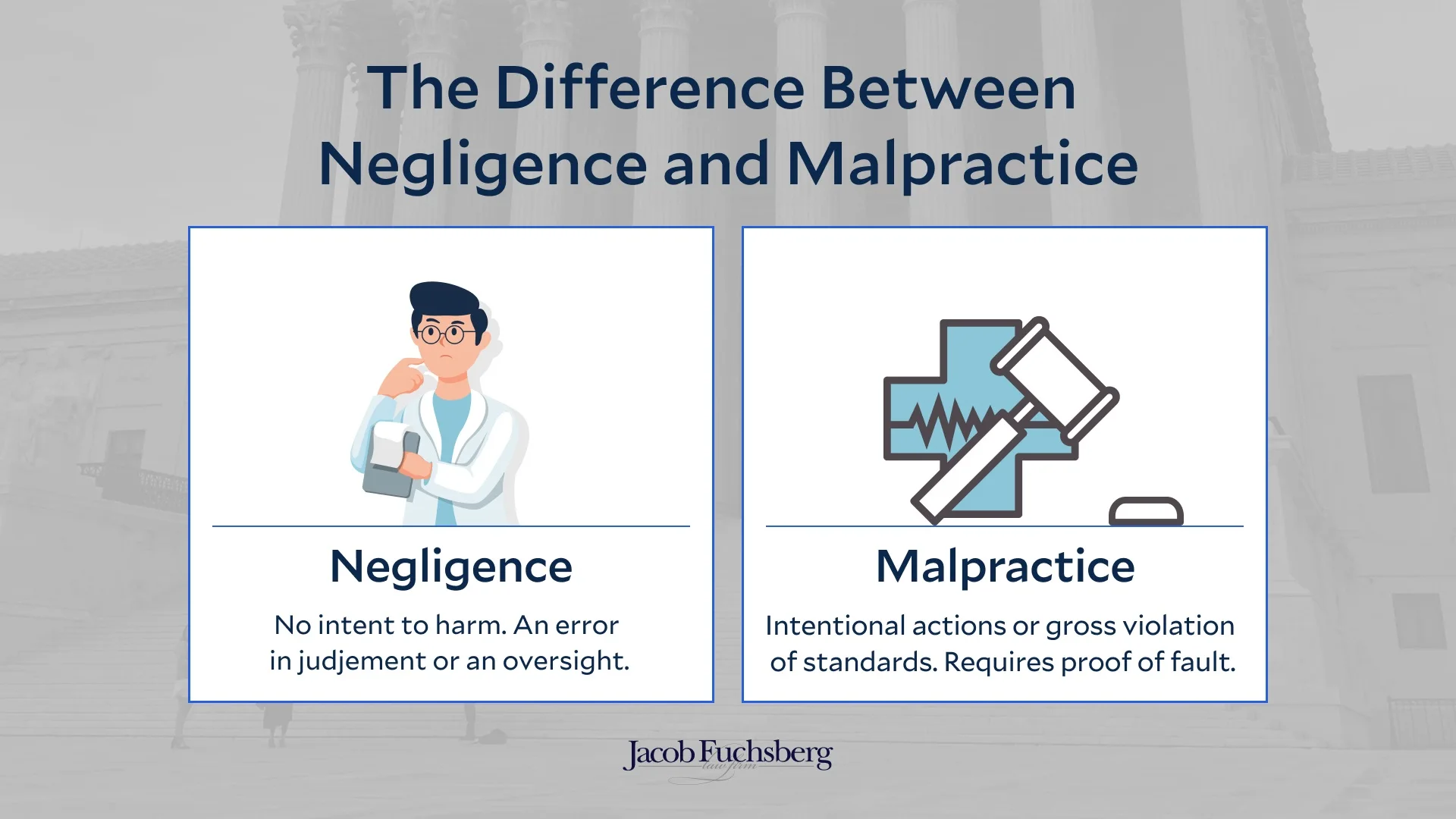
- Negligence: Occurs when a medical professional fails to act with reasonable care or diligence, without intending to harm the patient. Negligence does not require proving intent, but rather an error in judgment or an oversight.
- Malpractice: Involves an intentional act or an extreme departure from the standard of care that a reasonable professional would follow. Malpractice requires proving that the professional acted in a way that no reasonable medical professional would under similar circumstances.
Legal Implications of Medical Negligence and Malpractice
The duty of care is a legal duty in both medical negligence and medical malpractice claims. Healthcare providers have a legal obligation to act in the best interest of their patients, offering care that meets or exceeds the accepted standard. When the legal duty is breached, it can lead to either negligence or malpractice, depending on the severity of the breach and the intent behind it.
Healthcare providers can be held liable for breaching their legal responsibility to patients. In legal proceedings, the responsible party is the individual or entity found to have breached the standard of care.
Negligence may lead to civil liability, where the patient can receive compensation for harm caused, including medical bills and pain and suffering. On the other hand, medical malpractice often involves more serious consequences, including professional discipline, loss of medical licenses, or even criminal charges for severe malpractice.
Compensatory Damages in Medical Negligence and Malpractice Cases

Compensatory damages are awarded to the plaintiff in the event of a successful claim. These are designed to compensate the victim for actual losses suffered, including both special and general damages.
- Economic damages: This is another term often used for special damages, covering quantifiable losses such as medical expenses, lost income, and future earnings.
- Non-economic damages: This term is often used in place of general damages and refers to compensation for intangible losses such as pain and suffering, emotional distress, and loss of quality of life.
Time Limits for Making a Medical Malpractice or Negligence Claim
There are specific time limits for filing a medical malpractice or medical negligence lawsuit, known as the statute of limitations. In New York, victims of medical malpractice or negligence typically have 30 months to file a claim. However, various rules may either extend or shorten the applicable deadline depending on the specific circumstances of the case, such as:
- Discovery rule: If the patient only discovers the harm later (for example, a medical device or sponge left in the patient), the time limit might start from the date of discovery, not from the date of the incident.
- Exceptions: There could be exceptions to the statute of limitations, such as if the injured patient is a minor.
Filing your claim promptly is crucial, as missing the legal deadline may result in losing your right to seek compensation.
It’s important to consult with our medical malpractice lawyers as soon as possible to ensure your medical malpractice case is filed within the required time frame.
Can I Sue for Negligence or Malpractice If I Wasn’t Injured?

A common question in medical malpractice and negligence cases is whether a patient can sue if they weren’t physically injured. Generally, a claim requires an injured patient who has suffered harm as a result of the healthcare provider’s actions. Both negligence and malpractice require proving that harm resulted from the provider’s conduct.
However, if a medical professional’s mistake led to potential harm, like a delayed diagnosis a claim may still be possible. Consulting an experienced attorney is essential to determine if a valid case exists.
What to Do If You Experience Medical Malpractice or Negligence
If you suspect you’ve experienced medical malpractice or negligence, here are the steps you should take:
- Consult with your healthcare provider: Start by informing your doctor or medical facility about the issue. They might help you clarify the situation.
- Gather and review your medical records: Request copies of your medical records as soon as possible. These documents are essential for supporting your claim and will be a key part of the discovery process.
- Seek legal counsel: A medical malpractice lawyer can assess your case and guide you through the legal process.
- File your claim on time: In most cases, you have a limited time to file a negligence or medical malpractice lawsuit, typically 30 months in New York, unless specific exceptions apply.
Need Legal Help with Medical Malpractice or Negligence?
If you or a loved one has been affected by medical negligence or malpractice, our experienced New York attorneys are here to guide you through the legal process.
Protecting Your Rights in Cases of Medical Negligence and Malpractice
Understanding the differences between medical negligence and malpractice is integral to understanding your rights. While negligence may involve simple errors, medical malpractice is a more severe breach of the duty of care. If you or a loved one has experienced minor or severe injuries due to a healthcare provider’s actions, contact our experienced attorneys from New York City today for a free consultation and ensure your rights are protected.