.svg)

- Loading...
When a nurse's failure to meet the standard of care causes a patient serious harm, it is called negligent nursing care. In New York, patients injured by a nurse's negligence have the right to pursue a medical malpractice claim against the nurse, their supervising staff, and in many cases the hospital itself. This guide explains how these claims work, what you need to prove, and what steps to take if you believe you were harmed.
What Is Negligent Nursing Care
All healthcare professionals, including nurses, owe patients a duty to provide reasonable care under the circumstances. Negligent nursing care occurs when a nurse fails to meet this professional standard of medical care, and as a result, a patient suffers injury or death. These cases can also give rise to claims for negligent supervision if another nurse had a duty to supervise the allegedly negligent nurse.
Common Examples of Negligent Nursing Care Claims
Nurses are present at nearly every stage of a patient's hospital stay, which means their errors can take many forms. The following are common examples of acts or omissions that can lead to a negligent nursing care claim:
- Failure to monitor patients for conditions like bedsores and urinary tract infections;
- Medication errors involving the wrong dose or medication;
- Mistakes while performing routine procedures entrusted to them, like drawing blood, catheterizing patients, and intubating patients;
- Poor documentation that leaves doctors and administrators with incorrect or missing information;
- Bad screening, where they fail to ask questions about a patient's symptoms, allergies, and medical history;
- Errors in electronic health records (EHR), including entering incorrect data or failing to flag critical changes in a patient's condition;
- Mistakes in remote or telehealth monitoring settings, where a delayed response to deteriorating vitals can cause serious harm.
In many cases, negligent nursing care often goes unnoticed until an adverse event, such as an allergic reaction or drug overdose, occurs. Unfortunately, by the time anyone notices anything, the patient may have already suffered serious harm.
Who Is Responsible for Negligent Nursing Care
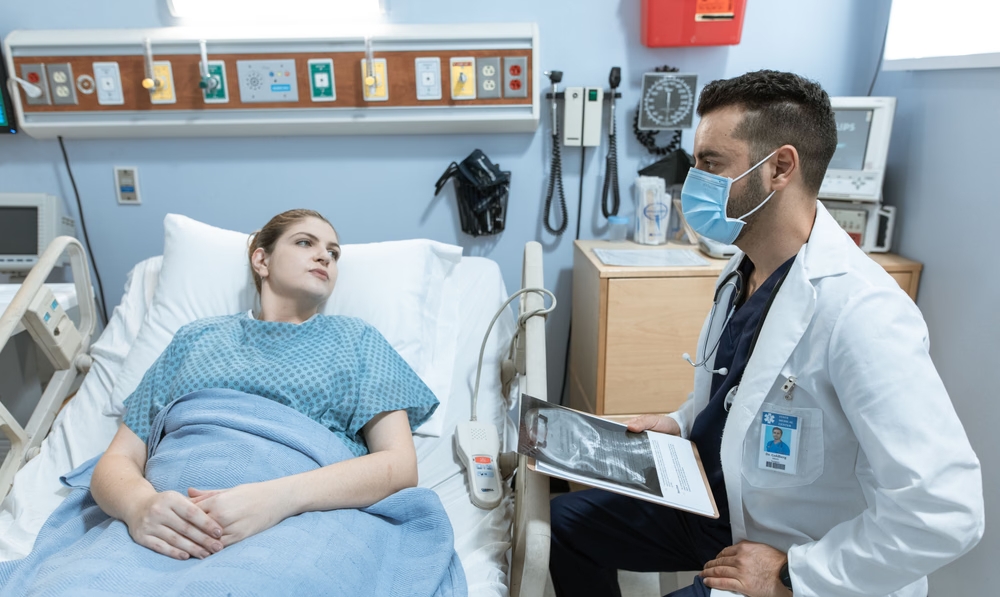
When a nurse's negligence causes patient harm, they bear direct liability. However, responsibility does not always stop with the individual nurse. Others can share in the liability through actions such as:
- Fellow nurses who saw something harmful and failed to intervene or report it;
- Supervising nurses who neglected to train and monitor the nurses working under them;
- Doctors who gave incorrect or unclear instructions to nurses or failed to follow up after assigning a task;
- Hospitals that hired nurses with poor track records and failed to supervise them to ensure competent performance.
The entities involved in your negligent nursing care claim may start with nursing staff but run all the way up to the hospital administrators. As your medical malpractice lawyer investigates your case, you may find that many others were involved.
#cta_start
Don't Let Nursing Malpractice Compromise Your Health and Well-Being
If you've suffered due to nursing negligence, you have the right to seek compensation and hold responsible parties accountable. Don't let fear or uncertainty prevent you from taking action. Contact a qualified nursing malpractice attorney at the Jacob Fuchsberg Law Firm today for a free consultation.
#cta_end
The Four Elements of a Negligent Nursing Care Claim
To file a successful claim for negligent nursing care in New York, four legal elements must be established. These are the same elements required in any medical malpractice case, whether against a nurse, a doctor, or a hospital.
1. Duty
There must be a duty owed to the patient. For example, the patient is owed a safe environment, and a nurse has a duty to follow physicians' orders for the patient. These duties arise from the nurse-patient relationship. You must show that the nurse had a legal duty to provide care to you. For example, if you have a heart attack on a bus, nurses do not have a duty to leap to your aid. But once they begin administering CPR, they establish the nurse-patient relationship and must provide care that a competent nurse would provide.
2. Breach of Duty
The specific duty owed to the patient has been breached, meaning that the duty has not been met. In terms of a safe environment, perhaps a nurse forgets to raise the bed rail, and the patient falls. The nurse's failure to maintain the patient's safe environment would constitute a breach of duty.
You will find a breach of the duty owed wherever nurse competency was lacking. But tracing your injuries to a nurse's breach of duty may be difficult. If you contract an infection in a hospital, you might not know whether they failed to scrub their hands or a custodian failed to sanitize your room. Ultimately, it may not matter who was to blame because a hospital bears liability when any employee meets the four elements.
3. Damages

The breach of duty must have caused injuries that result in damages. If the patient were not injured, no damages would be owed. In other words, even if the nurse made a mistake, you can only sue if you suffered harm.
Bear in mind that you do not need to suffer a severe injury to have damages. Any bodily injury, emotional distress, or discomfort you experienced qualifies. So if you develop bedsores when a nurse forgets to reposition you, you would have a claim for money damages even if they eventually healed. Conversely, if a nurse neglects to change your dressing but someone else does it before any adverse event occurs, you do not have a legal claim.
4. Causation
This is generally the most difficult element to prove in a medical malpractice lawsuit. There must be a direct cause-and-effect link between the breach of duty and the injury. The breach must have caused the injury. In the example above, if the nurse had not left the bed rail down, the patient would not have fallen.
At the same time, if a nurse's negligence sets off a chain of events, causation can still be established. For example, suppose a nurse fails to monitor a patient's vital signs. As a result, the doctor is unaware that the patient's blood pressure has dropped and orders the patient discharged. The patient then falls and loses consciousness due to low blood pressure. The nurse's failure is part of the causal chain under New York medical malpractice law.
What Are the Consequences of Negligent Nursing Care
The harm caused by negligent nursing care can be physical, financial, and emotional. Depending on the severity of the nurse's error, the consequences can range from temporary discomfort to permanent disability or death.
Health Complications
Negligent nursing care can lead to adverse health events. Sometimes these are minor and temporary, like a bruise from a fall. But they can also cause significant and permanent injuries, including the loss of a limb.
Wrongful Death
Family members can pursue a wrongful death claim when a nurse's negligence kills a loved one. If you believe a relative died due to negligent nursing care, contact a wrongful death lawyer to discuss your claim.
Financial Loss
Injuries from negligent nursing care can require corrective medical treatment and may prevent you from working. Your medical bills, lost wages, and out-of-pocket expenses constitute financial losses you can pursue in a claim.
Emotional Distress
Negligent nursing care can cause significant emotional distress. If you suffered an injury, you might have anxiety about your health and finances, or become depressed if your injuries have disabled you.
When you are injured by a nurse's breach of duty, you can pursue a medical malpractice case. Contact us to discuss your case with a New York negligent nursing care attorney.
#cta_start
Think a Nurse's Mistake Caused Your Injury?
Proving nursing malpractice means showing duty, breach, causation, and damages — and that takes the right records and expert review. Let our team look at what happened and tell you whether you may have a claim.
#cta_end
What Compensation Can You Recover in a Negligent Nursing Care Case
If you pursue a negligent nursing care claim in New York, you may be entitled to both economic and non-economic damages. New York law does not cap the damages you can receive in a medical malpractice claim, which means a jury may award whatever amount it finds fair based on the evidence. Compensation you may pursue includes:
- Medical costs, including corrective treatment and ongoing care;
- Lost wages and diminished earning capacity;
- Pain and mental anguish;
- Emotional distress and loss of enjoyment of life.
Since these losses are specific to your situation, there is no standard settlement figure. The value of a claim depends on the severity of the injury, how it affected your life, and the strength of the evidence. One of our skilled attorneys can help you assess what a fair recovery might look like in your case.
What to Do If You Suspect Negligent Nursing Care
If you believe a nurse's error caused you harm, the two most important steps are seeking medical attention and getting a legal evaluation as soon as possible. A doctor can review your medical records and determine whether your nurse violated New York State's Nurse Practice Act, which sets the standards for nursing practice in New York.
A medical malpractice attorney can then analyze the four elements of negligent nursing care and determine whether you received reasonable care under the circumstances. Acting early also helps preserve evidence, including records that hospitals and nursing staff may later make difficult to access.
How to Recognize Signs of Negligent Nursing Care
The signs of negligent nursing care are not always obvious right away. Here are some situations that may indicate a nurse's error caused your injury:
Adverse Drug Events
Some medication errors are unavoidable, but many result from negligence, including:
- Failing to ask you about drug allergies;
- Administering the wrong dose;
- Administering the wrong medication.
These errors can cause serious or fatal injuries.
Physical Injuries
Physical injuries from negligent nursing care can happen from:
- Patient falls due to a loose or unused bed rail;
- Bedsores from failure to reposition a patient;
- Neglecting or ignoring calls for assistance.
Physical injuries can range from bruises to broken bones.
Infections
Infections might result from poor hygiene. They can also result from unsanitized instruments and equipment. Infections also happen when hospital staff fail to change dressings and watch for signs of infection.
Confusion or Inexperience
A nurse who is confused or inexperienced often lacks adequate training and supervision. Confusion can also occur when a doctor gives unclear instructions or no instructions at all. If your nurse failed to carry out a task or did it incompetently, you may have experienced negligent nursing care.
How to Protect Yourself as a Patient
Patients are not powerless in reducing the risk of nursing errors. While the responsibility for proper care lies with the healthcare team, staying engaged in your own treatment can make a difference.

Pay Attention
Sometimes, a nurse's negligence results from misunderstanding the doctor's orders. Pay attention to the doctor's instructions and guide the nurse so the orders are performed correctly.
Ask Questions
Asking questions can prompt a nurse to pause and verify before acting. If something seems off, such as:
- Not having the correct medication ready;
- Failing to record your vital signs;
- Attempting to lift you in a way that risks a fall.
Do not hesitate to ask. Nursing errors often result from carelessness, and a simple question can prevent a serious mistake.
Possible Causes of Negligent Nursing Care
When you need healthcare, you expect doctors and nurses to be at their best. But healthcare providers are sometimes compromised due to:
- Overwork and fatigue;
- Lack of training;
- Poor supervision and communication;
- Substandard record-keeping;
- Errors caused by understaffing, which the American Nurses Association has identified as a significant patient safety risk.
Negligent nursing care happens for many reasons and often results from a combination of factors. But these factors are almost always preventable.
Hospitals that fail to hire enough staff may bear liability for the fatigue nurses experience from working too many shifts with too little rest. Doctors bear liability if they provide poor supervision and fail to give clear instructions. Senior nursing staff may also be liable if they fail to train others on the hospital's systems and procedures.
What Can Hospitals Do to Prevent Negligent Nursing Care
Hospitals are in the best position to prevent negligent nursing care. By implementing standards for nursing care and systems to prevent errors, hospitals can improve patient safety. They can also reduce the risk of a nursing breach of duty by:
- Creating clear lines of communication: Communication among doctors, nurses, and patients is critical to avoiding mistakes. A patient's condition should be known to everyone involved in the treatment plan. Structured handoff protocols, standardized reporting tools, and a culture that encourages nurses to raise concerns without fear of retaliation all reduce the risk of preventable harm.
- Setting expectations for nurses: Nurses sometimes feel overlooked in the healthcare process. Hospitals should make clear the role each nurse plays in delivering reasonable care, regardless of department. Setting measurable standards, providing ongoing training, and conducting regular performance reviews are practical steps toward reducing negligent nursing care at the institutional level.
#cta_start
Nursing Errors Have a Filing Deadline
Medical malpractice cases are often complex and time-consuming. As a result, you need a nursing malpractice attorney who can investigate your injuries, gather evidence from nurses and their employers, and fight for the compensation you deserve.
If you think you have been injured by a nurse because of malpractice, schedule a consultation with the Jacob Fuchsberg Law Firm to discuss your case with one of our New York medical malpractice attorneys. You can contact us online or by calling (212) 869-3500.
#cta_end